
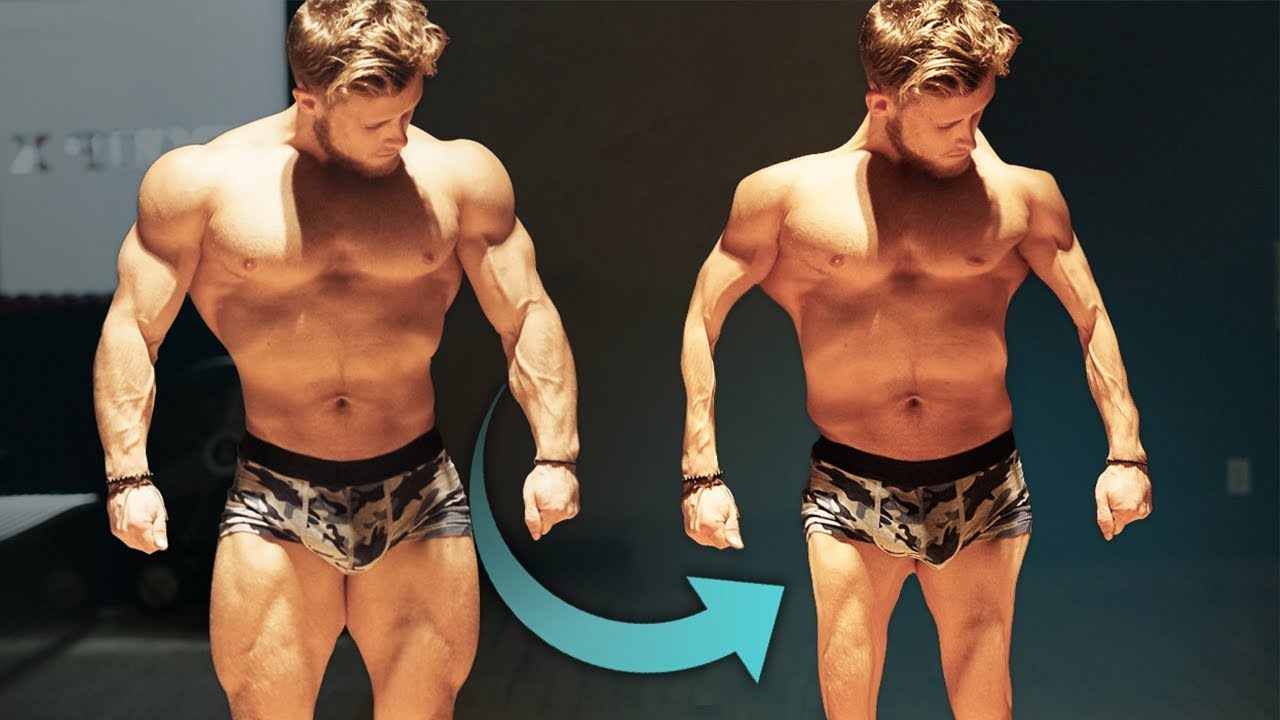
IS STARVATION MODE A REAL THING? (What The Science Says)
video description
Date: 2019-11-06
Related videos


Comments and reviews: 9
TamoVonBalf
Great video as always Jeff Although it seems to me that on the intuitive understanding of starvation mode, what you said actually supports its existence. Since TDEE does decrease when people implement an extreme caloric deficit (due, for the most part, to subconscious reduction in NEAT) then it seems that, in one sense, very low calorie diets do cause a kind of starvation mode where your body tries to hold on to as many calories (and thus, fat) as possible. I don't think many people actually thought that starvation mode is where the body stops burning fat entirely, I think the common view is that starvation mode just slows fat loss down a significant amount. This conclusion seems supported by your video. I suppose, on your definition of starvation mode, if metabolism just is RMR then starvation mode doesn't exist. But, if we think one's metabolism includes one's typical daily level of NEAT, then starvation mode does exist (my background is philosophy, so I'm not sure whether 'metabolism' is used in the former or latter sense more often, but I think the common folk would think that metabolism does include NEAT and is not just RMR. So, I would say this myth is 'kind of busted'.
reply
Great video as always Jeff Although it seems to me that on the intuitive understanding of starvation mode, what you said actually supports its existence. Since TDEE does decrease when people implement an extreme caloric deficit (due, for the most part, to subconscious reduction in NEAT) then it seems that, in one sense, very low calorie diets do cause a kind of starvation mode where your body tries to hold on to as many calories (and thus, fat) as possible. I don't think many people actually thought that starvation mode is where the body stops burning fat entirely, I think the common view is that starvation mode just slows fat loss down a significant amount. This conclusion seems supported by your video. I suppose, on your definition of starvation mode, if metabolism just is RMR then starvation mode doesn't exist. But, if we think one's metabolism includes one's typical daily level of NEAT, then starvation mode does exist (my background is philosophy, so I'm not sure whether 'metabolism' is used in the former or latter sense more often, but I think the common folk would think that metabolism does include NEAT and is not just RMR. So, I would say this myth is 'kind of busted'.
reply
Eitan Ben Dor
1) Nippard misreads the Minnesota Starvation Experiment. 2) Nippard gives short shrift to fasting. 1)Take another look at the study: figure 8. 9 of the Minnesota Starvation Experiment shows a more than 35% increase in body fat 9 weeks after the return to regular feeding. This figure later drops but remains significantly above the baseline recorded at week 1. This suggests a loss of lean muscle and a drop of metabolic rate that takes months to recover from. This is why most people using conventional caloric restriction diets yo yo and give up. Starvation mode may be hard to quantify and nebulous, but this doesn't make it a myth. 2)Where's the love for fasting Nippard? If your body fat is above essential levels (4%) and you do no eat, your body will burn fat for fuel for as long as it needs to and will up-regulate HGH to preserve lean muscle and keep your metabolism from slowing excessively. This is how we evolved as a species to survive in periods of feast and famine. This is not disputed. If you're going to do a video about caloric restriction and metabolism, then you simply have to cover fasting if you want to be thorough, yet it doesn't even get a mention.
reply
1) Nippard misreads the Minnesota Starvation Experiment. 2) Nippard gives short shrift to fasting. 1)Take another look at the study: figure 8. 9 of the Minnesota Starvation Experiment shows a more than 35% increase in body fat 9 weeks after the return to regular feeding. This figure later drops but remains significantly above the baseline recorded at week 1. This suggests a loss of lean muscle and a drop of metabolic rate that takes months to recover from. This is why most people using conventional caloric restriction diets yo yo and give up. Starvation mode may be hard to quantify and nebulous, but this doesn't make it a myth. 2)Where's the love for fasting Nippard? If your body fat is above essential levels (4%) and you do no eat, your body will burn fat for fuel for as long as it needs to and will up-regulate HGH to preserve lean muscle and keep your metabolism from slowing excessively. This is how we evolved as a species to survive in periods of feast and famine. This is not disputed. If you're going to do a video about caloric restriction and metabolism, then you simply have to cover fasting if you want to be thorough, yet it doesn't even get a mention.
reply
SomeSlyGuy1
Hi Jeff, long time listener, first time question My health journey is five years long now and I'm down 80lbs. I am at a place where I need to be more data driven in my weight loss as opposed to guessing my calorie intake and exercise. I use MyFitnessPal, have a scheduled exercise regiment, have a clean whole food lifestyle (i dont use the word diet, but I have not found an accurate way to: 1) figure out what my current BMR is so that I can more accurately track my calories (aiming for a 20% deficit)2) figure out how many calories are burned while weight lifting to ensure I am not under or over eating after exercise (unsurprisingly this is when I am most hungry so I want to sure I don't just give into my cravings)Any thoughts would be greatly appreciated I'm confident this will help me break my weight stall
reply
Hi Jeff, long time listener, first time question My health journey is five years long now and I'm down 80lbs. I am at a place where I need to be more data driven in my weight loss as opposed to guessing my calorie intake and exercise. I use MyFitnessPal, have a scheduled exercise regiment, have a clean whole food lifestyle (i dont use the word diet, but I have not found an accurate way to: 1) figure out what my current BMR is so that I can more accurately track my calories (aiming for a 20% deficit)2) figure out how many calories are burned while weight lifting to ensure I am not under or over eating after exercise (unsurprisingly this is when I am most hungry so I want to sure I don't just give into my cravings)Any thoughts would be greatly appreciated I'm confident this will help me break my weight stall
reply
Ivana F
I really loved this I actually did a 7 day water fast and while I did los weight during the fast (15lbs) I gained it all immediately after resuming normal eating- which isnt what I expected but also meant no significant muscle loss. I looked into Lyle McDonald and was so hooked on listening to his interviews and podcasts all week- Im really appreciative that he gave prominence to the differences in female physiology vs mens. This has been a thing of frustration for me He briefly mentioned re-esterification of fats after a workout. Would you do a rapid fire and mention this and how to combat this? I saw that doing MISS cardio could be a solution or waiting to eat after a workout? I know its probably insignificant in the long run in terms of fat loss but Im just interested.
reply
I really loved this I actually did a 7 day water fast and while I did los weight during the fast (15lbs) I gained it all immediately after resuming normal eating- which isnt what I expected but also meant no significant muscle loss. I looked into Lyle McDonald and was so hooked on listening to his interviews and podcasts all week- Im really appreciative that he gave prominence to the differences in female physiology vs mens. This has been a thing of frustration for me He briefly mentioned re-esterification of fats after a workout. Would you do a rapid fire and mention this and how to combat this? I saw that doing MISS cardio could be a solution or waiting to eat after a workout? I know its probably insignificant in the long run in terms of fat loss but Im just interested.
reply
Skandar San
What about all the post-workout tendencies like soaking your body in a tube full of ice, or hitting the sauna or massage room? I personally like going to the steam room for about 10 minutes (after workout and stretch) and then hitting a high pressure ice-cold shower (10 to 15s) and then taking a shower (regular water temperature. I do it mostly because I like it and feel more awake and my muscles a bit more relaxed as if I just simply took a shower. I've seen other dudes that take their workout serious hitting the sauna room and then the shower, or a combination of sauna and steam room. Never actually heard of someone at my gym soaking their body in tubes full of ice though.
reply
What about all the post-workout tendencies like soaking your body in a tube full of ice, or hitting the sauna or massage room? I personally like going to the steam room for about 10 minutes (after workout and stretch) and then hitting a high pressure ice-cold shower (10 to 15s) and then taking a shower (regular water temperature. I do it mostly because I like it and feel more awake and my muscles a bit more relaxed as if I just simply took a shower. I've seen other dudes that take their workout serious hitting the sauna room and then the shower, or a combination of sauna and steam room. Never actually heard of someone at my gym soaking their body in tubes full of ice though.
reply
hamza boufous
Hey jeff, nice content as usual for me it's totally true thing. I've been dieting for 2 years and i couldn't loose weight as i was eating between 1200 and 1500 kcal a day while training 6 days a week. This year i decided to bulk even if i'm still skinny fat. I aded progressively my calories to around 2500 kcal and i started doing full bodies 3 times a week, but the most surprisinly thing is that i'm gaining muscle, strenght, and i started to loose weight again. What kind of sorcery is this haha. Our bodies are just amazing and fascinating. Can someone explain to me why? i'm guessing because i'm just a beginner and my body finally went out from that starvation mode.
reply
Hey jeff, nice content as usual for me it's totally true thing. I've been dieting for 2 years and i couldn't loose weight as i was eating between 1200 and 1500 kcal a day while training 6 days a week. This year i decided to bulk even if i'm still skinny fat. I aded progressively my calories to around 2500 kcal and i started doing full bodies 3 times a week, but the most surprisinly thing is that i'm gaining muscle, strenght, and i started to loose weight again. What kind of sorcery is this haha. Our bodies are just amazing and fascinating. Can someone explain to me why? i'm guessing because i'm just a beginner and my body finally went out from that starvation mode.
reply
Doug Lerner
Thank you for this video. This is what I keep trying to tell fellow dieters who reflexively jump on the starvation mode myth. It's something I think we dieters wish was true. But as you point out, while there are other reasons as well, the most obvious reason is just that people tend to be bad at tracking calories. I've been logging with MyFitnessPal for 2, 235 days now, with losses and regains. If II eat fewer calories I lose, and if I eat too many calories I gain. It really does come down to that. I like your suggestion to try to take it slower to help avoid rebounds.
reply
Thank you for this video. This is what I keep trying to tell fellow dieters who reflexively jump on the starvation mode myth. It's something I think we dieters wish was true. But as you point out, while there are other reasons as well, the most obvious reason is just that people tend to be bad at tracking calories. I've been logging with MyFitnessPal for 2, 235 days now, with losses and regains. If II eat fewer calories I lose, and if I eat too many calories I gain. It really does come down to that. I like your suggestion to try to take it slower to help avoid rebounds.
reply
Dawn2Dusknback
This video is so vindicating for all those times my partner dismissed me when I told him 'starvation mode' doesn't make sense, the metabolism isn't responding the food intake, it's responding to body mass. This absolutely isn't healthy, but I went from 'thin' to 'skeletal' within six months due to anorexia and continued losing weight after entering treatment, so hearing a 200lb person who's never missed a meal explain to me that starving a healthy body will 'stop' weight loss just kills me. There's an insane amount of cognitive dissonance when it comes to dieting.
reply
This video is so vindicating for all those times my partner dismissed me when I told him 'starvation mode' doesn't make sense, the metabolism isn't responding the food intake, it's responding to body mass. This absolutely isn't healthy, but I went from 'thin' to 'skeletal' within six months due to anorexia and continued losing weight after entering treatment, so hearing a 200lb person who's never missed a meal explain to me that starving a healthy body will 'stop' weight loss just kills me. There's an insane amount of cognitive dissonance when it comes to dieting.
reply
2335467
I disagree, the first time I got really cut I went as low as 1600 cal a day plus 1 hour weight training and 35 minutes hitt training right after weight training. After a bulking phase, which I put on mostly fat I went for another cut knowing that 1600 cal a day was successful for me before, and I lost nothing. I was on that starvation diet almost a year. I think the study you mention was for guys who were first time dieters, after many times cutting and bulking I think the body adapts, and I am not fat ( about 12 % BF) but I can't get rid of doughy lower belly.
reply
I disagree, the first time I got really cut I went as low as 1600 cal a day plus 1 hour weight training and 35 minutes hitt training right after weight training. After a bulking phase, which I put on mostly fat I went for another cut knowing that 1600 cal a day was successful for me before, and I lost nothing. I was on that starvation diet almost a year. I think the study you mention was for guys who were first time dieters, after many times cutting and bulking I think the body adapts, and I am not fat ( about 12 % BF) but I can't get rid of doughy lower belly.
reply
Add a review, comment
Other channel videos


 14:39
14:39


