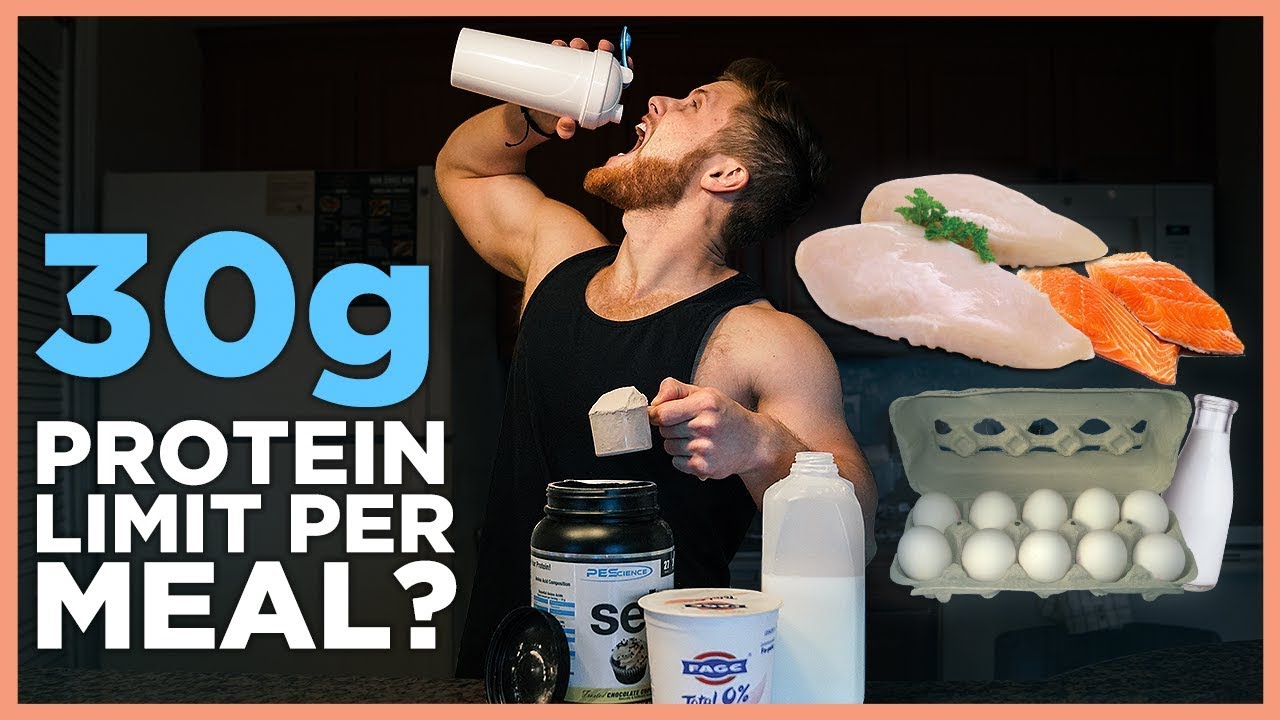
How Much Protein Can You Absorb In One Meal? (20g? 30g? 100g)
video description
Date: 2019-11-06
Related videos


Comments and reviews: 9
Ricky Le
Great video. The delivery of info was fantastic. Really love your videos I got excited thinking this would be one of the few videos out there that really highlights and challenges the common myths surrounding protein consumption - particularly in regards to building muscle and even performance. Kinda sucked that even after all the studies, in the end 1g per lbs of body weight as recommended. We pretty much ended up where we started. 1g per lbs has been the rule of thumb for a while now and it seems like there's still a large group of people that are looking for reasons to justify consuming even more despite studies continuing to suggest we're already consuming more than we really need for muscle protein synthesis. I'm more positioned to consume as little protein as possible but still promote MPS because of the effects protein has on aging - it promotes it. Dr. Valter Longo has shown this in his work and Dr. David Sinclair suggest this too (both of these are leading figures in the realm of aging. Dr. Gabrielle Lyons believes in high protein consumption but realises that individuals who regularly and intensely exercise don't need as much protein as someone who doesn't to induce MPS yet for some reason pushes high protein consumption. I want to build muscle but I don't want to speed up aging either. There has to be an optimal amount where someone can build muscle and keep total consume relatively low. Also if 36g of protein is enough for a 200lbs man, isn't adding 164g (200g total) more a little excess? Again love the video but this protein stuff gets super complicated.
reply
Great video. The delivery of info was fantastic. Really love your videos I got excited thinking this would be one of the few videos out there that really highlights and challenges the common myths surrounding protein consumption - particularly in regards to building muscle and even performance. Kinda sucked that even after all the studies, in the end 1g per lbs of body weight as recommended. We pretty much ended up where we started. 1g per lbs has been the rule of thumb for a while now and it seems like there's still a large group of people that are looking for reasons to justify consuming even more despite studies continuing to suggest we're already consuming more than we really need for muscle protein synthesis. I'm more positioned to consume as little protein as possible but still promote MPS because of the effects protein has on aging - it promotes it. Dr. Valter Longo has shown this in his work and Dr. David Sinclair suggest this too (both of these are leading figures in the realm of aging. Dr. Gabrielle Lyons believes in high protein consumption but realises that individuals who regularly and intensely exercise don't need as much protein as someone who doesn't to induce MPS yet for some reason pushes high protein consumption. I want to build muscle but I don't want to speed up aging either. There has to be an optimal amount where someone can build muscle and keep total consume relatively low. Also if 36g of protein is enough for a 200lbs man, isn't adding 164g (200g total) more a little excess? Again love the video but this protein stuff gets super complicated.
reply
christian Sykes
Jeff Nippard, I believe the wrong question is being asked. A meal is subjective and meals vary, and I believe the study about whey absorption is just that about whey protein. So with whey protein being a fast absorbing protein you can absorb 20-30 grams of protein in two hours which breaks down to 10-15 per hour. So now we factor in the digestion of a meal, lets say its a large meal and takes 8 hours to digest and it has a total 80 grams of protein your body is able to absorb all of the protein because its average rate of absorption is 10 grams an hour. Same logic goes with protein powder, whey protein that is weighed out to 80 grams of protein will largely be wasted if consumed all at once, but that same amount of protein but as casein will largely fully absorb. So if efficiency is your goal averaging 10-15 grams a protein per hour between meals with sufficient digestion periods for the volume ingested.
reply
Jeff Nippard, I believe the wrong question is being asked. A meal is subjective and meals vary, and I believe the study about whey absorption is just that about whey protein. So with whey protein being a fast absorbing protein you can absorb 20-30 grams of protein in two hours which breaks down to 10-15 per hour. So now we factor in the digestion of a meal, lets say its a large meal and takes 8 hours to digest and it has a total 80 grams of protein your body is able to absorb all of the protein because its average rate of absorption is 10 grams an hour. Same logic goes with protein powder, whey protein that is weighed out to 80 grams of protein will largely be wasted if consumed all at once, but that same amount of protein but as casein will largely fully absorb. So if efficiency is your goal averaging 10-15 grams a protein per hour between meals with sufficient digestion periods for the volume ingested.
reply
davidsirmons
Hm. Well, people are confusing absorb with able to enzymatically break down. Meat protein takes a long time to break down via the enzymes released from the pancreas, with some additional breakdown via pepsin in the saliva, which is released by the mouth during eating and up to an hour after. It's intended by nature to be swallowed to aid that digestion. While there may be a limit on what that enzyme combination can break down in X time, there's a second aspect to this: protein powders. Protein powders typically have a mix of enzymes added in for the very purpose of digesting quickly, far quicker than the average gram equivalent of meat protein would break down. Powders will break down in 30 minutes fully, while meat fiber takes hours. That flood of aminos from powders can easily allow a person to supersede what meat fiber digestion would impose as a daily maximum on protein digestion and absorption.
reply
Hm. Well, people are confusing absorb with able to enzymatically break down. Meat protein takes a long time to break down via the enzymes released from the pancreas, with some additional breakdown via pepsin in the saliva, which is released by the mouth during eating and up to an hour after. It's intended by nature to be swallowed to aid that digestion. While there may be a limit on what that enzyme combination can break down in X time, there's a second aspect to this: protein powders. Protein powders typically have a mix of enzymes added in for the very purpose of digesting quickly, far quicker than the average gram equivalent of meat protein would break down. Powders will break down in 30 minutes fully, while meat fiber takes hours. That flood of aminos from powders can easily allow a person to supersede what meat fiber digestion would impose as a daily maximum on protein digestion and absorption.
reply
Kelley Sauer
The video was presented in a way to seem scientific. However, its studies seem to confuse rate of absorption with a limit on absorption. Perhaps a person can only absorb 20 -30 grams of protein in an hour after a meal. What about in the two - three hours following a meal? If that person continues to absorb at a rate of 20 g per hour, then the extra grams consumed were not wasted. The anecdotal evidence is very strong to support more than 30 g per meal. For generations, thousands of very hard working men (miners, farmers, etc) survived and maintained strong bodies eating only a large breakfast and large supper. They were too far away to have more than a light lunch that they could carry. Today, there are many many people who only consume one large meal at the end of the day. This may not be optimum for a bodybuilder physique but that doesn't mean it isn't effective for the most part.
reply
The video was presented in a way to seem scientific. However, its studies seem to confuse rate of absorption with a limit on absorption. Perhaps a person can only absorb 20 -30 grams of protein in an hour after a meal. What about in the two - three hours following a meal? If that person continues to absorb at a rate of 20 g per hour, then the extra grams consumed were not wasted. The anecdotal evidence is very strong to support more than 30 g per meal. For generations, thousands of very hard working men (miners, farmers, etc) survived and maintained strong bodies eating only a large breakfast and large supper. They were too far away to have more than a light lunch that they could carry. Today, there are many many people who only consume one large meal at the end of the day. This may not be optimum for a bodybuilder physique but that doesn't mean it isn't effective for the most part.
reply
Jaime iz Real
This is terrible advice for certain people that have stomach issues. In particular, 'Chrohn's Disease', or it's also called 'Leaky Gut Syndrome'. People with this condition cannot and should not eat huge amounts of food in one sitting. Why? Because their intestines are too thin (damaged, which unfortunately allows undigested food particles to seep through to their bloodstream. The human body treats any undigested food particle in the bloodstream as an enemy, thus triggering an immune response. When undigested food particles enter the bloodstream, symptoms include: Mild to severe heart palpitations, anxiety attacks, mania/depression, unexplained weight loss, insomnia, anemia, and even worse things can happen if the person doesn't get help.
reply
This is terrible advice for certain people that have stomach issues. In particular, 'Chrohn's Disease', or it's also called 'Leaky Gut Syndrome'. People with this condition cannot and should not eat huge amounts of food in one sitting. Why? Because their intestines are too thin (damaged, which unfortunately allows undigested food particles to seep through to their bloodstream. The human body treats any undigested food particle in the bloodstream as an enemy, thus triggering an immune response. When undigested food particles enter the bloodstream, symptoms include: Mild to severe heart palpitations, anxiety attacks, mania/depression, unexplained weight loss, insomnia, anemia, and even worse things can happen if the person doesn't get help.
reply
Derrin Evans
So applied to me: 5'11. 205lb. I do 3 full body workouts per week with moderate cardio on rest days. Vegetarian deployed in iraq. 1st meal. Am protein shake 25g protein. Oatmeal 8 grams protein. 2nd. Gerb seed meal (3oz) 24 gram protein. Mix with 1 pack oatmeal adds 4 grams protein. 3rd: Same as two. 4th (preworkout meal): veggie plate (spinach/broccoli/banana) 8 g protein with shake. 5th: final meal: rice and veggie plate = 10 g with casein shake 25g. After this video I adjusted my protein intake to this. Where before i was just taking protein before and after workout with 2 big ass meals. This has worked much better and clean protein sources is way better for digestion and energy levels.
reply
So applied to me: 5'11. 205lb. I do 3 full body workouts per week with moderate cardio on rest days. Vegetarian deployed in iraq. 1st meal. Am protein shake 25g protein. Oatmeal 8 grams protein. 2nd. Gerb seed meal (3oz) 24 gram protein. Mix with 1 pack oatmeal adds 4 grams protein. 3rd: Same as two. 4th (preworkout meal): veggie plate (spinach/broccoli/banana) 8 g protein with shake. 5th: final meal: rice and veggie plate = 10 g with casein shake 25g. After this video I adjusted my protein intake to this. Where before i was just taking protein before and after workout with 2 big ass meals. This has worked much better and clean protein sources is way better for digestion and energy levels.
reply
Bilal Bilal
i can imagine that when you drink a whey shake with lets say 60g of protein can be a waste because it will be digested very fast. but when you eat 300g steak the protein and amino acids wont be imidiatly in the system because the absorbation will last. and 300g steak needs more time to be absorbed than 100g so it will be digested step by step. so you can count 300g steak like for example 2 shakes with 1-2 hours between. so the 300g steak wouldt be a waste of protein. i think you cant compare every source of protein since they have diffrent times for digestion and it depends if your stomach is full or you compine the protein with fats
reply
i can imagine that when you drink a whey shake with lets say 60g of protein can be a waste because it will be digested very fast. but when you eat 300g steak the protein and amino acids wont be imidiatly in the system because the absorbation will last. and 300g steak needs more time to be absorbed than 100g so it will be digested step by step. so you can count 300g steak like for example 2 shakes with 1-2 hours between. so the 300g steak wouldt be a waste of protein. i think you cant compare every source of protein since they have diffrent times for digestion and it depends if your stomach is full or you compine the protein with fats
reply
Glen Risk
The problem with this is that there is no time frame specified? So you can only make use of 22-36 grams of protein per sitting but how long is a sitting? I'm doing IF OMAD and eat every half hour to an hour for 2-3 hours. I'm consuming 26-2800 total calories and 130-170 grams of protein in that short window. Being older the prolonged fasting keeps my testosterone and growth hormone higher which is important to enable greater lean mass at my age. Insulin resistance is also much more of a problem as you get older. You have some good information mate but it definitely seems skewed to a younger audience.
reply
The problem with this is that there is no time frame specified? So you can only make use of 22-36 grams of protein per sitting but how long is a sitting? I'm doing IF OMAD and eat every half hour to an hour for 2-3 hours. I'm consuming 26-2800 total calories and 130-170 grams of protein in that short window. Being older the prolonged fasting keeps my testosterone and growth hormone higher which is important to enable greater lean mass at my age. Insulin resistance is also much more of a problem as you get older. You have some good information mate but it definitely seems skewed to a younger audience.
reply
roch reech
Hey Jeff find this out: does all the healing take place at night? And not much repairing in post workout? (Intuitively no maybe the repairing starts immediately or is stallef until adequate stimulatioj is received) so is it better to eat proteins in the night then? Also you did mention in one of your other videos that Muscle sensitivity goes as long as for 2 days post resistance training, so how does that corelate with the healing repairing hypertrophy aspect and thus proteins in association? Id be jumping up and down with a replyFellow nerd who is short and on his way to being like you: /
reply
Hey Jeff find this out: does all the healing take place at night? And not much repairing in post workout? (Intuitively no maybe the repairing starts immediately or is stallef until adequate stimulatioj is received) so is it better to eat proteins in the night then? Also you did mention in one of your other videos that Muscle sensitivity goes as long as for 2 days post resistance training, so how does that corelate with the healing repairing hypertrophy aspect and thus proteins in association? Id be jumping up and down with a replyFellow nerd who is short and on his way to being like you: /
reply
Add a review, comment
Other channel videos