How was Portugal Formed
video description
Date: 2026-03-07
Related videos


Comments and reviews: 20
Paul-r3v
Braga was capital for three tlhousand years before the battle of Ourique, it was capital of the Celts Bracari confederation before Christ, then the Romans by Octavius Augustus made Braga capital of the important province Gallaecia. Next Braga was the only capital that the germanics Swabians had. Followed it was the spiritual capitall of alll Hispanias. It was in Braga where still exists the documents of funding the Knight Templars for the first time in all Europe. In the 10th century Guimaraes was just a farm not even a small village. As Braga was capital of Gallaecia who was than part of Asturias, it was where the Reconquista was truelly organized. Only 3. 000 years after, the capital changed to the moorish Lisbon.
reply
Braga was capital for three tlhousand years before the battle of Ourique, it was capital of the Celts Bracari confederation before Christ, then the Romans by Octavius Augustus made Braga capital of the important province Gallaecia. Next Braga was the only capital that the germanics Swabians had. Followed it was the spiritual capitall of alll Hispanias. It was in Braga where still exists the documents of funding the Knight Templars for the first time in all Europe. In the 10th century Guimaraes was just a farm not even a small village. As Braga was capital of Gallaecia who was than part of Asturias, it was where the Reconquista was truelly organized. Only 3. 000 years after, the capital changed to the moorish Lisbon.
reply
zimriel
Okay, one more comment - compared with my comment earlier, this one is more constructive / formative perhaps.
I think some note should be made of the f->h shift in east-Iberian Romance (also some north Italian, Gascon, and even Faliscan in the elder days. This shift in the east could be passed off as dialect. But in the 1200s Alfonso X made it a core of what Spanish meant. This excluded all the western dialects from Galician to Portuguese, which was by then spoken in Lishbuna [Lisboa] too as you note.
That decision has resulted in Galician to this day considering itself a separate language - but, more so, Portuguese, because it was independent, and also had the betrayal at Badajoz in fairly recent memory.
reply
Okay, one more comment - compared with my comment earlier, this one is more constructive / formative perhaps.
I think some note should be made of the f->h shift in east-Iberian Romance (also some north Italian, Gascon, and even Faliscan in the elder days. This shift in the east could be passed off as dialect. But in the 1200s Alfonso X made it a core of what Spanish meant. This excluded all the western dialects from Galician to Portuguese, which was by then spoken in Lishbuna [Lisboa] too as you note.
That decision has resulted in Galician to this day considering itself a separate language - but, more so, Portuguese, because it was independent, and also had the betrayal at Badajoz in fairly recent memory.
reply
felipeknebel2392
It’s worth emphasizing that a crucial detail appears to have been missed here.
Most historical summaries jump straight from medieval border-making to modern Portugal, but there’s a dramatic bridge in between: Portugal’s center of power temporarily moved out of Europe.
Under the pressure of the Napoleonic Wars, when Lisbon became strategically untenable, the Portugal Braganza monarchy relocated to Brasil.
Yes, for thirteen years (18081821, Rio de Janeiro, Brasil, became the seat of the court and government, effectively serving as Portugal’s de facto capital, the place where imperial administration, diplomacy, and major decisions were actually made.
reply
It’s worth emphasizing that a crucial detail appears to have been missed here.
Most historical summaries jump straight from medieval border-making to modern Portugal, but there’s a dramatic bridge in between: Portugal’s center of power temporarily moved out of Europe.
Under the pressure of the Napoleonic Wars, when Lisbon became strategically untenable, the Portugal Braganza monarchy relocated to Brasil.
Yes, for thirteen years (18081821, Rio de Janeiro, Brasil, became the seat of the court and government, effectively serving as Portugal’s de facto capital, the place where imperial administration, diplomacy, and major decisions were actually made.
reply
knowledgia
I dont see Portugal as a phenomenon of early political centralization process. Quite the contrary, i see Portugal as a medieval county that escaped the iberian political centralization process led by Castella. At the very least, Portugal should have been part of a United Kingdom of Iberia, together with Spain. Its position facing the Atlantic and the pioneerism in oceanic navigation made it possible for this medieval county to remain independent and continue its crusade against the infidels sailling the oceans.
reply
I dont see Portugal as a phenomenon of early political centralization process. Quite the contrary, i see Portugal as a medieval county that escaped the iberian political centralization process led by Castella. At the very least, Portugal should have been part of a United Kingdom of Iberia, together with Spain. Its position facing the Atlantic and the pioneerism in oceanic navigation made it possible for this medieval county to remain independent and continue its crusade against the infidels sailling the oceans.
reply
1904lisbon
dutch saying they are the TRUE Sailors because of VOC: Portuguese created the modern ships that were capable of long trips (an update from the viking ships) and went to sea WITHOUT MAPS and TOOLS when everyone thought the Atlantic Sea was hell on earth. The dutch who began going to sea more than 100 years after the first portuguese ship left Sagres and whom had all that information debunked (gathered by the portuguese) maps, modern tools, it's not even comparable. But Okay
reply
dutch saying they are the TRUE Sailors because of VOC: Portuguese created the modern ships that were capable of long trips (an update from the viking ships) and went to sea WITHOUT MAPS and TOOLS when everyone thought the Atlantic Sea was hell on earth. The dutch who began going to sea more than 100 years after the first portuguese ship left Sagres and whom had all that information debunked (gathered by the portuguese) maps, modern tools, it's not even comparable. But Okay
reply
zimriel
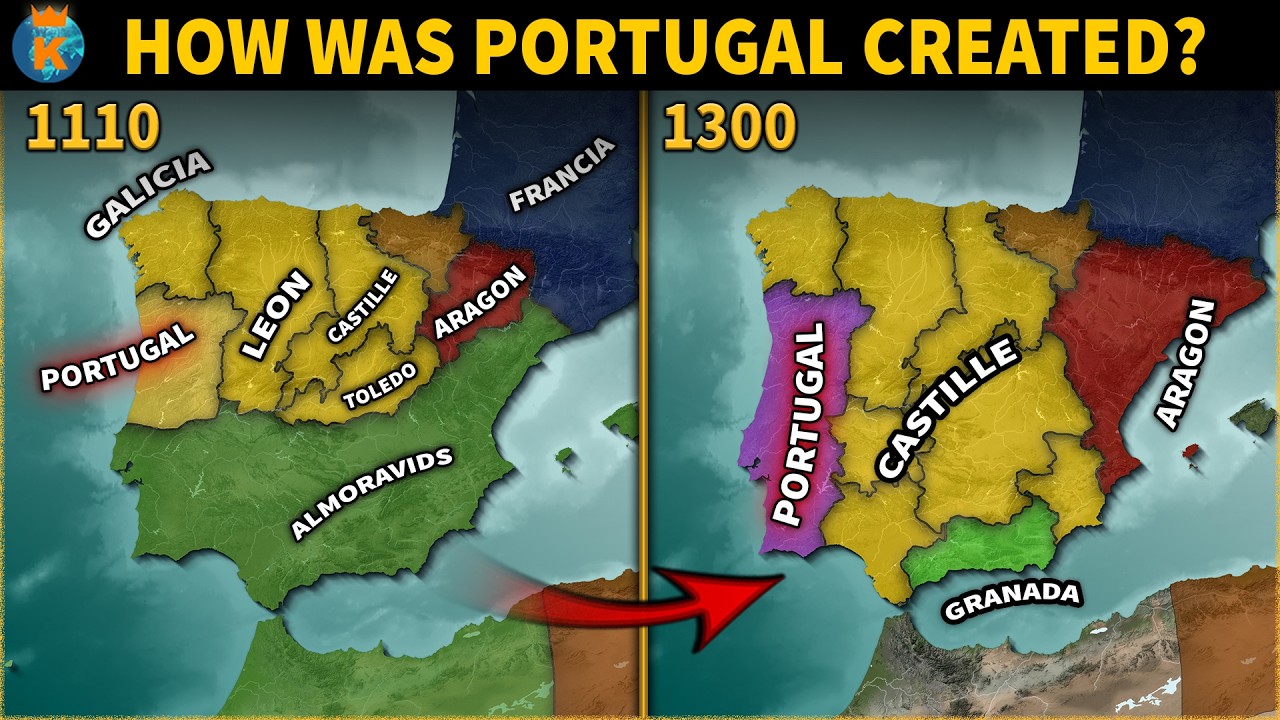
4: 55 the seat of power early 1000s was Castile - contradicts the map.
The map is right and the voiceover is wrong. Castile was a mere county, a markland as the Danes might say. Their shared liege lord was in Leon.
Castile was often autonomous at this time (so says Wiki, and as history will show it will become more powerful than Leon; but Castile's count had no writ over the western coast in the early 1000s.
reply
4: 55 the seat of power early 1000s was Castile - contradicts the map.
The map is right and the voiceover is wrong. Castile was a mere county, a markland as the Danes might say. Their shared liege lord was in Leon.
Castile was often autonomous at this time (so says Wiki, and as history will show it will become more powerful than Leon; but Castile's count had no writ over the western coast in the early 1000s.
reply
carolsarmag
2 things missing:
- Portugal helped what was to become Spain to conquer the last of the peninsula territory from the muslims in the 15th century
- Portugal was never Spain. Even during the personal union under the same king, it remained a sovereign kingdom by law. When Philip III of Spain (II of Portugal) attempted to violate that autonomy, the Portuguese nobility revolted and threw out the Spanish.
reply
2 things missing:
- Portugal helped what was to become Spain to conquer the last of the peninsula territory from the muslims in the 15th century
- Portugal was never Spain. Even during the personal union under the same king, it remained a sovereign kingdom by law. When Philip III of Spain (II of Portugal) attempted to violate that autonomy, the Portuguese nobility revolted and threw out the Spanish.
reply
1vespa
The strongholds and cities that Alphonso lost after his failed attempt to capture Badajoz weren't in the Portuguese south as you've shown, they are in nowadays Spain. Those previously conquered cities are today Trujillo, Caceres and Merida. Alphonso wanted to conquer the lands that once were a part of Roman Lusitania, because it was common sense that the Portuguese were the right heirs of the Lusitanii.
reply
The strongholds and cities that Alphonso lost after his failed attempt to capture Badajoz weren't in the Portuguese south as you've shown, they are in nowadays Spain. Those previously conquered cities are today Trujillo, Caceres and Merida. Alphonso wanted to conquer the lands that once were a part of Roman Lusitania, because it was common sense that the Portuguese were the right heirs of the Lusitanii.
reply
PedroAguiar
The initial question of the video is just nonsense. You can ask nearly the same about any country in Europe (or the world, for that matter. But there are countries that made the leap from non-extant to empire in a much shorter timespan than Portugal's -- for instance, the Netherlands, that started their independence war in 1581 and had a global colonial empire by the 1630s.
reply
The initial question of the video is just nonsense. You can ask nearly the same about any country in Europe (or the world, for that matter. But there are countries that made the leap from non-extant to empire in a much shorter timespan than Portugal's -- for instance, the Netherlands, that started their independence war in 1581 and had a global colonial empire by the 1630s.
reply
Tusiriakest
In the Iberian Union, Portugal was not under Spain but under Habsbourgs (The King of Portugal was also the King of Spain.
The Cortes of Tomar Agreement that started the Union expressly protected Portugal's independence, and not autonomy (like other Iberian Kingdoms. Two Empires, Two Crowns, One King (Filipe I of Portugal/Felipe II of Spain.
reply
In the Iberian Union, Portugal was not under Spain but under Habsbourgs (The King of Portugal was also the King of Spain.
The Cortes of Tomar Agreement that started the Union expressly protected Portugal's independence, and not autonomy (like other Iberian Kingdoms. Two Empires, Two Crowns, One King (Filipe I of Portugal/Felipe II of Spain.
reply
knowledgia
And all these battles, all these wars, people had to think. We have to go chop these other dudes with swords and axes. It wasnt just pull a trigger, kill from far away. They had to walk up with a 3 foot knife and wack someone. Makes you wonder. Who earned the better homeland. People that shoot, or people that had to stand there and chop people.
reply
And all these battles, all these wars, people had to think. We have to go chop these other dudes with swords and axes. It wasnt just pull a trigger, kill from far away. They had to walk up with a 3 foot knife and wack someone. Makes you wonder. Who earned the better homeland. People that shoot, or people that had to stand there and chop people.
reply
knowledgia
Rome didn't lay the foundations of Lisbon!
Lisbon is at least a 1000 years older than Rome!
It's the Second Oldest Capital in Europe!
When the Phoenicians arrived, 3500 years ago, it already existed as the most Important settlement along the Tagus.
I'm only a minute in and I'm already mad.
reply
Rome didn't lay the foundations of Lisbon!
Lisbon is at least a 1000 years older than Rome!
It's the Second Oldest Capital in Europe!
When the Phoenicians arrived, 3500 years ago, it already existed as the most Important settlement along the Tagus.
I'm only a minute in and I'm already mad.
reply
diogor420
As a Portuguese, I find it quite annoying that he says Alfonso instead of Afonso
EDIT: After looking into it, it's way worse than I thought. Alfonso is the Spanish spelling, even in archaic Portuguese, it was always Afonso! That's very rude for Portuguese people.
reply
As a Portuguese, I find it quite annoying that he says Alfonso instead of Afonso
EDIT: After looking into it, it's way worse than I thought. Alfonso is the Spanish spelling, even in archaic Portuguese, it was always Afonso! That's very rude for Portuguese people.
reply
ricardomartins286
If yes it's true most important cities were founded by Rome. Those in particularly where not. The Romans already found a small city with buildings painted white overlooking Douros mouth. And Lisbon is well known to have been founded by Phoenicians.
reply
If yes it's true most important cities were founded by Rome. Those in particularly where not. The Romans already found a small city with buildings painted white overlooking Douros mouth. And Lisbon is well known to have been founded by Phoenicians.
reply
amilgz
Sorry to correct, but the names of two of the Galician cities are wrong. It's OURENSE and TUI, not Orense and Tuy.
Also there is not such thing as Old Portuguese, but Old Galician-Portuguese, the common ancestor of modern Galician and modern Portuguese.
reply
Sorry to correct, but the names of two of the Galician cities are wrong. It's OURENSE and TUI, not Orense and Tuy.
Also there is not such thing as Old Portuguese, but Old Galician-Portuguese, the common ancestor of modern Galician and modern Portuguese.
reply
ignacioheredia9599
In one sentence; A count of Burgundian origin is not satisfied with being just count of a county bordering Al Andalus in the south of Galicia and a kingdom is created when he cannot defeat his mother and crown himself as King of Galicia.
reply
In one sentence; A count of Burgundian origin is not satisfied with being just count of a county bordering Al Andalus in the south of Galicia and a kingdom is created when he cannot defeat his mother and crown himself as King of Galicia.
reply
Xstorytime-t3q
Portugal exists for the same reasons other countries exist: to be masters of its own destiny, to preserve its culture and language, to shape its history, to protect its people, and to organize society under shared laws.
reply
Portugal exists for the same reasons other countries exist: to be masters of its own destiny, to preserve its culture and language, to shape its history, to protect its people, and to organize society under shared laws.
reply
jordi6795
What a fascinating history Portugal has! It’s like a mirror of what Catalonia might have been. With both nations uprising in 1640 against Castile-Spain expansionism, Portugal succeeded while Catalonia not unfortunately.
reply
What a fascinating history Portugal has! It’s like a mirror of what Catalonia might have been. With both nations uprising in 1640 against Castile-Spain expansionism, Portugal succeeded while Catalonia not unfortunately.
reply
miguelsilva9118
When you mentioned the Romans encountering the Lusitanians I thought you were gonna say that they were a people that won't govern themselves and won't let themselves be governed, as is attributed to a Roman general
reply
When you mentioned the Romans encountering the Lusitanians I thought you were gonna say that they were a people that won't govern themselves and won't let themselves be governed, as is attributed to a Roman general
reply
SilvaRocha-v3n
woww! I did not know all that about Portugal. Portugal and Spain were world powers for many centuries but lost everything. they brought destruction to the Americas leaving a legacy of poverty that still present.
reply
woww! I did not know all that about Portugal. Portugal and Spain were world powers for many centuries but lost everything. they brought destruction to the Americas leaving a legacy of poverty that still present.
reply
Add a review, comment
Other channel videos

 12:21
12:21