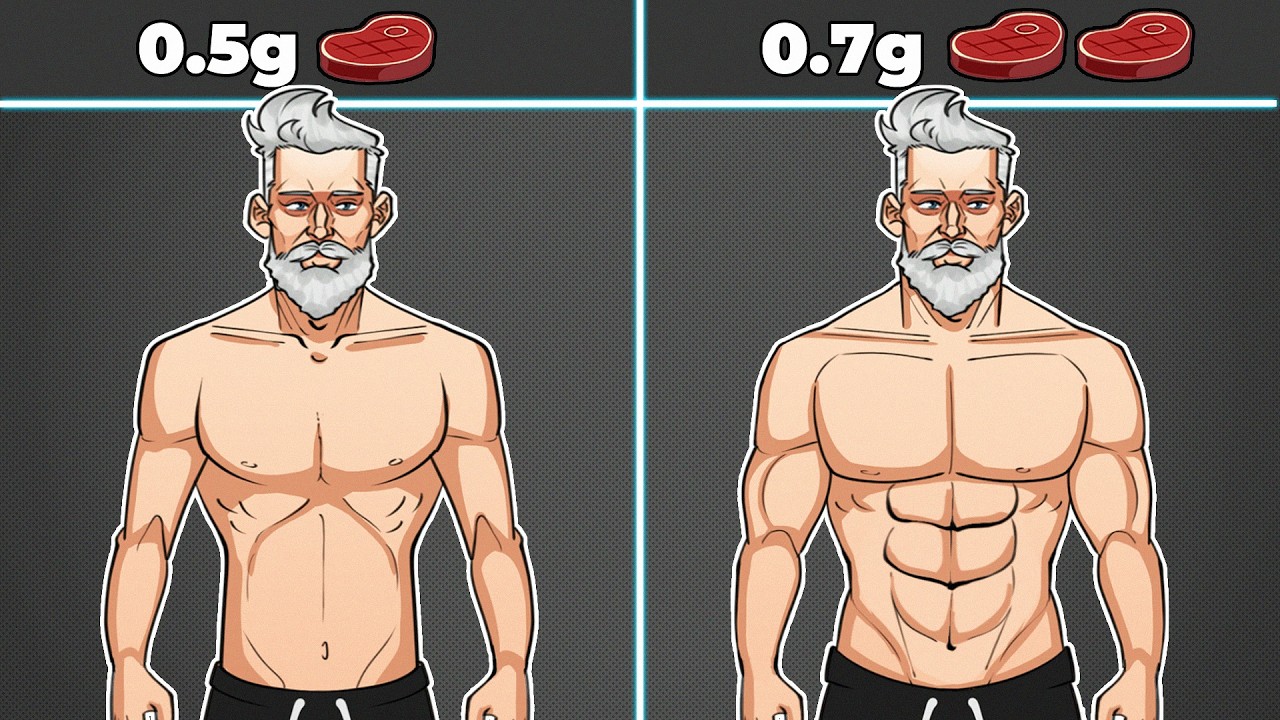
What's the Least Amount of Protein You Can Eat to Build Muscle
video description
Date: 2024-07-18
Related videos


Comments and reviews: 8
someguyusa
Copied from the dose-response study conclusion: These findings suggest that slightly increasing current protein intake for several months by 0. 1 g/kg/d in a dose-dependent manner over a range of doses from 0. 5 to 3. 5 g/kg/d may increase or maintain lean body mass.
These studies are all using grams of protein per kilogram of bodyweight. You are mistaken to suggest 0. 55g per pound of bodyweight as that is an error of 2. 2x due to the conversion ratio of kilograms to pounds.
So, it would be something like 0. 25g of protein per pound, not 0. 55g per pound. It's best to simply convert your bodyweight into kilograms, then adjust protein intake in grams accordingly.
reply
Copied from the dose-response study conclusion: These findings suggest that slightly increasing current protein intake for several months by 0. 1 g/kg/d in a dose-dependent manner over a range of doses from 0. 5 to 3. 5 g/kg/d may increase or maintain lean body mass.
These studies are all using grams of protein per kilogram of bodyweight. You are mistaken to suggest 0. 55g per pound of bodyweight as that is an error of 2. 2x due to the conversion ratio of kilograms to pounds.
So, it would be something like 0. 25g of protein per pound, not 0. 55g per pound. It's best to simply convert your bodyweight into kilograms, then adjust protein intake in grams accordingly.
reply
Shreadington
I just eat what my Coach outlines. Digestion and recovery is optimal. In my carb cycling summer prep phases now 192lbs very lean veins everywhere. Low carb days protein is 230g\- and high carb days it's at 180g bc carbs are protein sparing. In rebound phases protein stays around 230-240g and carbs are the variable. Diet is basically moderately high protein, low fat, moderate to high carbs. This allows me to stay lean, about 20lbs over competition weight, year round.
reply
I just eat what my Coach outlines. Digestion and recovery is optimal. In my carb cycling summer prep phases now 192lbs very lean veins everywhere. Low carb days protein is 230g\- and high carb days it's at 180g bc carbs are protein sparing. In rebound phases protein stays around 230-240g and carbs are the variable. Diet is basically moderately high protein, low fat, moderate to high carbs. This allows me to stay lean, about 20lbs over competition weight, year round.
reply
fearlessgreyfox
Just thought of an interesting question If the ranfge is now. 55 to 1 gram of protein does that mean that you could cycle protein like you do carbs between these values Or is it best to maintain a lower limit to not go under consistently
reply
Just thought of an interesting question If the ranfge is now. 55 to 1 gram of protein does that mean that you could cycle protein like you do carbs between these values Or is it best to maintain a lower limit to not go under consistently
reply
musclemonsters
Wo this is a very amazing and superb video bro telling about this topic of do we really need 1g of protein per pound of bodyweight and keep it up and keep up the good work as always and take care
Keep smiling always
reply
Wo this is a very amazing and superb video bro telling about this topic of do we really need 1g of protein per pound of bodyweight and keep it up and keep up the good work as always and take care
Keep smiling always
reply
elliotttodd3006
I struggle with my busy daily life to get 1 g of protein per kilogram daily. But I do reach about half my goal and still make gains not huge gains, but I definitely make gains.
reply
I struggle with my busy daily life to get 1 g of protein per kilogram daily. But I do reach about half my goal and still make gains not huge gains, but I definitely make gains.
reply
djahman8501
I was under the impression that you need 1, 6g per kg of LBM for maintenance, and 2g per kg of LBM if you want to build muscle. 1kg = 2. 2lbs.
reply
I was under the impression that you need 1, 6g per kg of LBM for maintenance, and 2g per kg of LBM if you want to build muscle. 1kg = 2. 2lbs.
reply
musclemonsters
Yes, some of these studies were done in KG. but rest assured that we took the conversion to lbs into account in our explanation.
reply
Yes, some of these studies were done in KG. but rest assured that we took the conversion to lbs into account in our explanation.
reply
kayd9597
It's per functional tissue which does not include the weight of fat as fat is a form of energy storage not functional tissue.
reply
It's per functional tissue which does not include the weight of fat as fat is a form of energy storage not functional tissue.
reply
Add a review, comment
Other channel videos