
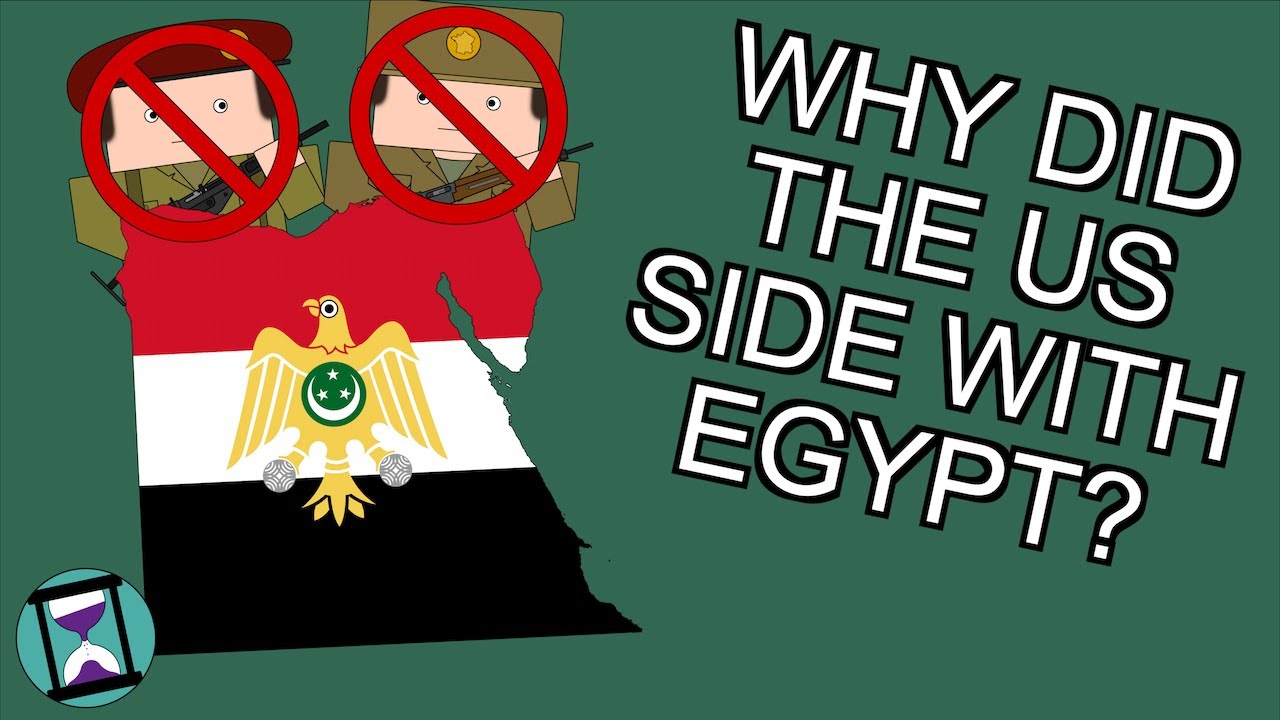
Why did the US side against Britain and France during the Suez Crisis (Short Animated Docu, emtary)
video description
Date: 2024-12-05
Related videos





Comments and reviews: 20
drdeadred851
This seems a bit misleading, France and the UK werent trying to reoccupy Eygpt or just doing it to be evil oppressors. The Suez Canal was owned by a French and British company since they built it and was absurdly important as it is today, but obviously more so at the time given the more unstable situation and both countries still having imperial possenions east of suez.
It was also the route that a massive chunk of all their oil imports came through. It being in the hands of a hostile power with a grudge or on the Soviet side would be hughly damaing for both countries militarily and economically. Nasser could, and very likely would have any way had the suez crisis never happened, massivly ramp up toll's for using the canal.
Nasser forcibly nationalised the Suez, had soldiers move in and kick out civilians working there to take it over. It was by any and all means illegal, hardily liberating oppressed Egyptians, it was just a hostile takeover of an economic asset.
There was also a very vague back and forth between US and UK officials, the US by the time Suez had happened had pretty much said yeah we dont like this nasser guy either, would be cool if he went away. the UK officials took this as implicit approval to oust him in some way, probably assuming that the US was aware that France and the UK would obviously want to regain the canal back in the process. Both sides were too vague with each other.
The US frankly seems like it reacted as it did more for the chance to whip the UK and France to make them more compliant while disregarding fairly genuine concerns and interests of their 'allies' rather than out of some serious moral outrage or fear of escalation. We've got to remember that it was hardily a new thing even back then for the US to oust a leader they didnt like or for them to act quite hostilely towards France or the UK acting independently at all or even just seeming to intentionally be malicious to them.
The US also only BEGAN to give control of the Panama canal to Panama about 20 years later, a much more friendly country by comparison and a comparatively less important waterway globally. It only gave up full control in 1999.
Whos to bet what would have happened to the Panamanian government that tried to forcibly nationalise the Canal with the military rolling in and offering no compensation.
reply
This seems a bit misleading, France and the UK werent trying to reoccupy Eygpt or just doing it to be evil oppressors. The Suez Canal was owned by a French and British company since they built it and was absurdly important as it is today, but obviously more so at the time given the more unstable situation and both countries still having imperial possenions east of suez.
It was also the route that a massive chunk of all their oil imports came through. It being in the hands of a hostile power with a grudge or on the Soviet side would be hughly damaing for both countries militarily and economically. Nasser could, and very likely would have any way had the suez crisis never happened, massivly ramp up toll's for using the canal.
Nasser forcibly nationalised the Suez, had soldiers move in and kick out civilians working there to take it over. It was by any and all means illegal, hardily liberating oppressed Egyptians, it was just a hostile takeover of an economic asset.
There was also a very vague back and forth between US and UK officials, the US by the time Suez had happened had pretty much said yeah we dont like this nasser guy either, would be cool if he went away. the UK officials took this as implicit approval to oust him in some way, probably assuming that the US was aware that France and the UK would obviously want to regain the canal back in the process. Both sides were too vague with each other.
The US frankly seems like it reacted as it did more for the chance to whip the UK and France to make them more compliant while disregarding fairly genuine concerns and interests of their 'allies' rather than out of some serious moral outrage or fear of escalation. We've got to remember that it was hardily a new thing even back then for the US to oust a leader they didnt like or for them to act quite hostilely towards France or the UK acting independently at all or even just seeming to intentionally be malicious to them.
The US also only BEGAN to give control of the Panama canal to Panama about 20 years later, a much more friendly country by comparison and a comparatively less important waterway globally. It only gave up full control in 1999.
Whos to bet what would have happened to the Panamanian government that tried to forcibly nationalise the Canal with the military rolling in and offering no compensation.
reply
jamesjacobson3966
Eisenhower or at least the US state department precipitated this whole fiasco. The US refused to extend any credit to Egypt after Nasser purchased Migs from the Soviet Union. Egypt needed money desperately as the construction of the Aswan dam was about to commence or already underway. The easiest solution in Nassers opinion was seizing the Canal from its joint owners Britain & France. The end result was pretty much all the fears listed in this clip. Nasser became the prototype for every Arab strongman including Gaddaffi, Saddam Hussein and the elder Assad in Syria till his death. The assasaination of the Iraqi king shortly thereafter as collateral damage. When has there not been an endless war somewhere in the Middle East ever since then The traditional european powers sadly weakened with the US picking up the slack and paying for it ever since. People remember Eisenhower for his warning about the military industrial complex when more attention should be paid to his inept foreign policy. Harry Truman always complained that in his opinion Ike wasn’t particularly bright after all.
reply
Eisenhower or at least the US state department precipitated this whole fiasco. The US refused to extend any credit to Egypt after Nasser purchased Migs from the Soviet Union. Egypt needed money desperately as the construction of the Aswan dam was about to commence or already underway. The easiest solution in Nassers opinion was seizing the Canal from its joint owners Britain & France. The end result was pretty much all the fears listed in this clip. Nasser became the prototype for every Arab strongman including Gaddaffi, Saddam Hussein and the elder Assad in Syria till his death. The assasaination of the Iraqi king shortly thereafter as collateral damage. When has there not been an endless war somewhere in the Middle East ever since then The traditional european powers sadly weakened with the US picking up the slack and paying for it ever since. People remember Eisenhower for his warning about the military industrial complex when more attention should be paid to his inept foreign policy. Harry Truman always complained that in his opinion Ike wasn’t particularly bright after all.
reply
Argentvs
This was the exact precedent that convinced the miltary that in 1982 the british, who were escrapping their fleet, wouldn't fight but sit on the table to negotiate the islands transfer.
Argentina, being the main US anticommunist ally in America, believed the US would pull the leash on London and force them to sit. And in fact the Pentagon and the foreign service were against Reagan support for UK as it would turn latinamerica to the USSR and send a bad imsge if the US supporting a colonial power.
Reagan just supported UK because Thatcher was his friend and only political ally and he needed to save her to win the elections.
reply
This was the exact precedent that convinced the miltary that in 1982 the british, who were escrapping their fleet, wouldn't fight but sit on the table to negotiate the islands transfer.
Argentina, being the main US anticommunist ally in America, believed the US would pull the leash on London and force them to sit. And in fact the Pentagon and the foreign service were against Reagan support for UK as it would turn latinamerica to the USSR and send a bad imsge if the US supporting a colonial power.
Reagan just supported UK because Thatcher was his friend and only political ally and he needed to save her to win the elections.
reply
MaeseSantiago
In my opinion, the Suez Crisis is arguably the most significant geopolitical event of the 20th century, at least symbolically, following World War II. It was a unique moment in history where the United States and the Soviet Union found themselves on the same side of an issue. This event marked a turning point, forcing the two traditional Western powers, the United Kingdom and France, to acknowledge their declining influence on the global stage. The crisis underscored the emergence of the US and the USSR as the new superpowers, capable of dictating the course of international affairs.
reply
In my opinion, the Suez Crisis is arguably the most significant geopolitical event of the 20th century, at least symbolically, following World War II. It was a unique moment in history where the United States and the Soviet Union found themselves on the same side of an issue. This event marked a turning point, forcing the two traditional Western powers, the United Kingdom and France, to acknowledge their declining influence on the global stage. The crisis underscored the emergence of the US and the USSR as the new superpowers, capable of dictating the course of international affairs.
reply
history_matters
Interestingly, Israel escaped the humiliation suffered by Britain and France. After they were forced to withdraw, Israel stayed in the Sinai in defiance of the US and UN for almost half a year, and only left when Egypt acceded to all its demands. The Straits of Tiran were reopened for Israeli shipping (the main cause for Israel attacking Egypt, not the Suez Canal, as this video accidentally misstates, the UN established a buffer zone in the Sinai and sent peacekeepers, and Egyptian-sponsored guerilla attacks on Israelis in southern Israel ended.
reply
Interestingly, Israel escaped the humiliation suffered by Britain and France. After they were forced to withdraw, Israel stayed in the Sinai in defiance of the US and UN for almost half a year, and only left when Egypt acceded to all its demands. The Straits of Tiran were reopened for Israeli shipping (the main cause for Israel attacking Egypt, not the Suez Canal, as this video accidentally misstates, the UN established a buffer zone in the Sinai and sent peacekeepers, and Egyptian-sponsored guerilla attacks on Israelis in southern Israel ended.
reply
bundayeti
The Suez Crisis successfully shifted Western focus away from the Hungarian revolution, allowing the Soviet Union to crush it with full force and orchestrating mass imprisonments and executions afterwards.
Many Hungarians felt a general sense of abandonment and betrayal from the West, ironically enough, especially from the US. Some have even claimed that the US deliberately and willingly sold Hungary out in exchange of the Suez Canal, obviously not correct, but that is what it felt like to some.
reply
The Suez Crisis successfully shifted Western focus away from the Hungarian revolution, allowing the Soviet Union to crush it with full force and orchestrating mass imprisonments and executions afterwards.
Many Hungarians felt a general sense of abandonment and betrayal from the West, ironically enough, especially from the US. Some have even claimed that the US deliberately and willingly sold Hungary out in exchange of the Suez Canal, obviously not correct, but that is what it felt like to some.
reply
bixbysnyder-00
The US was never really comfortable with the European's non-subtle approach to colonialism. The US is and was far more comfortable with indirect means of domination through economics, trade relationships, and military alliances. After World War II, the US flat out told European powers they would not help the financially strapped Europeans regain their colonies. As far as the US was concerned, colonialism was dead. Neo-colonialism rose to replace it.
reply
The US was never really comfortable with the European's non-subtle approach to colonialism. The US is and was far more comfortable with indirect means of domination through economics, trade relationships, and military alliances. After World War II, the US flat out told European powers they would not help the financially strapped Europeans regain their colonies. As far as the US was concerned, colonialism was dead. Neo-colonialism rose to replace it.
reply
Jacut
Results on the French side of things: sped up the development of the nuclear program which was completed soon after (it was already well under way, but not seen as a priority before that, and increased collaboration on nuclear civil and military research with Israel, which led it to eventually obtain the bomb. Also a long-lasting mistrust with one of its previously closest ally. That worked out well for the US!
reply
Results on the French side of things: sped up the development of the nuclear program which was completed soon after (it was already well under way, but not seen as a priority before that, and increased collaboration on nuclear civil and military research with Israel, which led it to eventually obtain the bomb. Also a long-lasting mistrust with one of its previously closest ally. That worked out well for the US!
reply
ElladanKenet
There's also the ideological thorn of 'Hey, Egypt's fighting against British oppression and taxes. Why does this sound familiar'
The underlying context is a bit different of course, but at face value, it would look very strange indeed if the USA of all countries didn't back Egypt.
Ignoring the hindsight of all of the other hypocritical stuff the Americans did, of course.
reply
There's also the ideological thorn of 'Hey, Egypt's fighting against British oppression and taxes. Why does this sound familiar'
The underlying context is a bit different of course, but at face value, it would look very strange indeed if the USA of all countries didn't back Egypt.
Ignoring the hindsight of all of the other hypocritical stuff the Americans did, of course.
reply
mathlete855
Genuine question for any non-Americans, what is the typical range they teach history in primary schools in your country For example: here in the USA we learned from the American Revolution till the end of the Cold War(1760-1990. But I’m curious to learn how they teach history in other countries who can have up to a millennia of history.
reply
Genuine question for any non-Americans, what is the typical range they teach history in primary schools in your country For example: here in the USA we learned from the American Revolution till the end of the Cold War(1760-1990. But I’m curious to learn how they teach history in other countries who can have up to a millennia of history.
reply
JustinMinckley
One of the biggest reasons this backfired too was Israel's confidence and announced before the Suez was fully taken was that they accomplished what they wanted to. Eisenhower had made this a red line for years prior to the invasion. the fact the Brits and French knew was a big reason for his anger.
reply
One of the biggest reasons this backfired too was Israel's confidence and announced before the Suez was fully taken was that they accomplished what they wanted to. Eisenhower had made this a red line for years prior to the invasion. the fact the Brits and French knew was a big reason for his anger.
reply
samuelwinburn210
I wrote a paper on this in college. The two close allies went against a treaty with the United States promising they wouldn’t give arms to Israel, or something along those lines. Eisenhower pulled the US Dollar from the British economy, and Anthony Eden cried to Eisenhower for forgiveness.
reply
I wrote a paper on this in college. The two close allies went against a treaty with the United States promising they wouldn’t give arms to Israel, or something along those lines. Eisenhower pulled the US Dollar from the British economy, and Anthony Eden cried to Eisenhower for forgiveness.
reply
kzazazazk
Britain and France wanted it to seem like they were setting up a buffer zone to stop the war, so when they occupied the canal they told both parties to withdraw away from the canal, but Israel hadn't even reached it yet. This basically exposed them for orchestrating the entire thing
reply
Britain and France wanted it to seem like they were setting up a buffer zone to stop the war, so when they occupied the canal they told both parties to withdraw away from the canal, but Israel hadn't even reached it yet. This basically exposed them for orchestrating the entire thing
reply
alecblunden8615
I understand Eisenhower later admitted he was wrong - but it was the era why the US was trying to demolish the European Empires in apparent blissful ignorance that they would cease to police their traditional spheres of influence. Came as a nasty, and expensive, shock.
reply
I understand Eisenhower later admitted he was wrong - but it was the era why the US was trying to demolish the European Empires in apparent blissful ignorance that they would cease to police their traditional spheres of influence. Came as a nasty, and expensive, shock.
reply
bluerisk
Israel was attacked nonetheless, the entire middle East is till today a disaster region, and the region hates the US most.
France never forgave this treason, and the British ignored the US during the Falkland crisis later war.
Imagina they had listen to the US again.
reply
Israel was attacked nonetheless, the entire middle East is till today a disaster region, and the region hates the US most.
France never forgave this treason, and the British ignored the US during the Falkland crisis later war.
Imagina they had listen to the US again.
reply
okamijubei
Simple, oil and political dominance. America want to be in charge and England was already in decline after World War II do to loss of many men and finances and unfavorable politics. But their power are only in preserve when they joined NATO and side with America.
reply
Simple, oil and political dominance. America want to be in charge and England was already in decline after World War II do to loss of many men and finances and unfavorable politics. But their power are only in preserve when they joined NATO and side with America.
reply
dkenner
And the UK and France basically withdrew from everything east of the Middle East, leaving it to the USA to deal with. It probably would have been cheaper and better for the USA if they let the pair deal with what they bought in Egypt and seen how it played out.
reply
And the UK and France basically withdrew from everything east of the Middle East, leaving it to the USA to deal with. It probably would have been cheaper and better for the USA if they let the pair deal with what they bought in Egypt and seen how it played out.
reply
Masv1pe
If France and UK decided to continue anyway, would it have been a bluff by the Americans I mean would the Suez crisis really have been worth losing their 2 most powerful allies Wouldn’t the potential repercussions have far outweighed the benefit
reply
If France and UK decided to continue anyway, would it have been a bluff by the Americans I mean would the Suez crisis really have been worth losing their 2 most powerful allies Wouldn’t the potential repercussions have far outweighed the benefit
reply
history_matters
Fun fact: This incident was why Britain refused to later aid the Americans in Vietnam and because Britain had just been fighting for 20 years in Malaya it had vital experience in jungle warfare that the Americans lacked
reply
Fun fact: This incident was why Britain refused to later aid the Americans in Vietnam and because Britain had just been fighting for 20 years in Malaya it had vital experience in jungle warfare that the Americans lacked
reply
bramstedt8997
Always amazes me how fast the British and French empires collapsed. Especially Britain. They may have been on the winning side of WWII but it certainly doesn’t seem that way when you see how things have gone since then
reply
Always amazes me how fast the British and French empires collapsed. Especially Britain. They may have been on the winning side of WWII but it certainly doesn’t seem that way when you see how things have gone since then
reply
Add a review, comment
Other channel videos



 3:21
3:21


