More Gains, Half the Time (LIFT LIKE THIS)
video description
Date: 2022-01-03
Related videos


Comments and reviews: 10
Jeremy
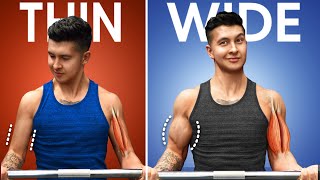
I've got my skinny twin brother working overtime on these thumbnails lately. Hope you enjoyed this one! NOTE: I want to again emphasize to be cautious of implementing some of these methods on heavy, compound movements (e. g. squats, deadlifts) where form breakdown creates a higher risk for potential injury. These methods are best used for movements where stability is less of a concern and/or when you have a spotter. Additional caveats: The extend to which you implement these methods depends on your goals, true time availability, and exercise selection. If you want to maximize growth, would I use these methods to replace all of my workouts? No, unless I truly was pressed for time - but I would (and do) intersperse these as part of my overall program to create a new stimulus for growth. Would I use these methods if I wanted to maximize strength overtime? No, because it doesn't lend itself well to progressive overload and accurate tracking. Would I use these methods if I was deep into a cut and very fatigued and low on energy? Probably not, as it would create a lot of excessive fatigue. HOWEVER, if I wanted to simply continue making gains, possibly even augment them, and cut down my workout time considerably, then these are great ways to do so if used wisely!
reply
I've got my skinny twin brother working overtime on these thumbnails lately. Hope you enjoyed this one! NOTE: I want to again emphasize to be cautious of implementing some of these methods on heavy, compound movements (e. g. squats, deadlifts) where form breakdown creates a higher risk for potential injury. These methods are best used for movements where stability is less of a concern and/or when you have a spotter. Additional caveats: The extend to which you implement these methods depends on your goals, true time availability, and exercise selection. If you want to maximize growth, would I use these methods to replace all of my workouts? No, unless I truly was pressed for time - but I would (and do) intersperse these as part of my overall program to create a new stimulus for growth. Would I use these methods if I wanted to maximize strength overtime? No, because it doesn't lend itself well to progressive overload and accurate tracking. Would I use these methods if I was deep into a cut and very fatigued and low on energy? Probably not, as it would create a lot of excessive fatigue. HOWEVER, if I wanted to simply continue making gains, possibly even augment them, and cut down my workout time considerably, then these are great ways to do so if used wisely!
reply
Mikeology
Ok so I tried the 3/7 method today and it seems to me there is a lot of missing information on how to go about it. First of all, I don't understand how one can possibly do this with 70% of their 1RM. On some exercises, I had to cut the weight to just above 50% of what I normally do 6-12 reps with and was still unable to do that 7th rep on the last sequence. On some exercises I couldn't manage 4 reps on that last set. I'm hesitant to pursue a method that requires such a drastic deloading. Maybe some people are more suited to this than others.
I'm also unclear about how progressive loading works here. Obviously, if you can do all the reps easily in both sequences, it's time to advance. But when you advance, how should you finish that last sequence when you're obviously not going to be able to do the last seven. Do you increase the rest after some or all of the sets, or do you do as many as you can of the last seven and move on when you finally can do all of them?
The fact that there hasn't been a lot of uptake on this since the study came out feeds my misgivings about it. Would hate to go deep into it and get very little from it.
Anyone else here try it? Would be interested in hearing from people who've been at it a while.
reply
Ok so I tried the 3/7 method today and it seems to me there is a lot of missing information on how to go about it. First of all, I don't understand how one can possibly do this with 70% of their 1RM. On some exercises, I had to cut the weight to just above 50% of what I normally do 6-12 reps with and was still unable to do that 7th rep on the last sequence. On some exercises I couldn't manage 4 reps on that last set. I'm hesitant to pursue a method that requires such a drastic deloading. Maybe some people are more suited to this than others.
I'm also unclear about how progressive loading works here. Obviously, if you can do all the reps easily in both sequences, it's time to advance. But when you advance, how should you finish that last sequence when you're obviously not going to be able to do the last seven. Do you increase the rest after some or all of the sets, or do you do as many as you can of the last seven and move on when you finally can do all of them?
The fact that there hasn't been a lot of uptake on this since the study came out feeds my misgivings about it. Would hate to go deep into it and get very little from it.
Anyone else here try it? Would be interested in hearing from people who've been at it a while.
reply
TheMrCaptainStfu
This method is ridiculous! Tension undertime, form, and progressive overload is all that matters, the basics! This obviously requires proper rest in between sets to get your muscles ready again. Sorry but there's no way magical way to effectively reduce the time in the gym without taking a loss. This isn't intuitive at all, it's basically just saying skip the required rest periods, which forces you to lower the weights, reduces your ability to move the weight, leads to form breakdown/injury, and I guarantee that you won't even hit failure due to lactic acid build up. This is ONE damn study with many variables involved, that alone classifies it as BROSCIENCE.
reply
This method is ridiculous! Tension undertime, form, and progressive overload is all that matters, the basics! This obviously requires proper rest in between sets to get your muscles ready again. Sorry but there's no way magical way to effectively reduce the time in the gym without taking a loss. This isn't intuitive at all, it's basically just saying skip the required rest periods, which forces you to lower the weights, reduces your ability to move the weight, leads to form breakdown/injury, and I guarantee that you won't even hit failure due to lactic acid build up. This is ONE damn study with many variables involved, that alone classifies it as BROSCIENCE.
reply
50th
The trouble with this analysis is that the 3/7 method, as outlined in the paper by Stragier, involved TWO ROUNDS of 3/7 sets plus 150s rest between them. When you do that, by my calcs there isn't much between that and say 5 sets of 8 reps with a 2 min rest period, once you add a 10 rep warmup set with a minute's rest - which is pretty much what I do.
A single rest pause set however is a about half the time or less.
reply
The trouble with this analysis is that the 3/7 method, as outlined in the paper by Stragier, involved TWO ROUNDS of 3/7 sets plus 150s rest between them. When you do that, by my calcs there isn't much between that and say 5 sets of 8 reps with a 2 min rest period, once you add a 10 rep warmup set with a minute's rest - which is pretty much what I do.
A single rest pause set however is a about half the time or less.
reply
Akash
JeremyEthier I think the mathematics for the Rest-Pause system is off my a few minutes - you didn't add the rest-period within the set.
I think each exercise has at least 40 seconds of rest (20 b/w each set, so a total of 406 seconds = 4 minutes would be added to the total, bringing it up to 23 minutes
reply
JeremyEthier I think the mathematics for the Rest-Pause system is off my a few minutes - you didn't add the rest-period within the set.
I think each exercise has at least 40 seconds of rest (20 b/w each set, so a total of 406 seconds = 4 minutes would be added to the total, bringing it up to 23 minutes
reply
Pugz78
Research showed that 2 minutes of rest in between sets showed significantly greater gains in both muscle size and strenght.
Research showed that 15 seconds of rest in between sets showed significantly greater gains in both muscle size and strenght compared to the traditional method.
Wait. what?
reply
Research showed that 2 minutes of rest in between sets showed significantly greater gains in both muscle size and strenght.
Research showed that 15 seconds of rest in between sets showed significantly greater gains in both muscle size and strenght compared to the traditional method.
Wait. what?
reply
Daniel
Hey it would be cool if you could say the disadvantages of these excersices too. I ask for it cause I remember in other videos you talked a lot about the pros of the traditional methode so I'm wondering if there is a downside for this. Thanks. Your videos are awesome, i'm coming back to the gym.
reply
Hey it would be cool if you could say the disadvantages of these excersices too. I ask for it cause I remember in other videos you talked a lot about the pros of the traditional methode so I'm wondering if there is a downside for this. Thanks. Your videos are awesome, i'm coming back to the gym.
reply
wassssup34579
I tried out the 3/7 method and it gives a very strong pump. But you must do the FULL 2 rounds of 5 sets (10 sets total) as stated in the original study. The second round is much more metabolically straining on the muscle compared to the first round.
reply
I tried out the 3/7 method and it gives a very strong pump. But you must do the FULL 2 rounds of 5 sets (10 sets total) as stated in the original study. The second round is much more metabolically straining on the muscle compared to the first round.
reply
Eric
Has anyone actually tried the 3/7 method? If so, what was your experience like and how would you compare this to a trad program of 3 sets of 6-12? (And were you doing two bouts of 3 reps ascending to 7 reps, or just one bout)
reply
Has anyone actually tried the 3/7 method? If so, what was your experience like and how would you compare this to a trad program of 3 sets of 6-12? (And were you doing two bouts of 3 reps ascending to 7 reps, or just one bout)
reply
Jay
Ill stick with 4 sets starting with 12 reps dropping to 8 reps heavy and rest about 30 seconds, very rare Ill train more than 20 minutes. Im open to a better way of training but I dont believe there is.
reply
Ill stick with 4 sets starting with 12 reps dropping to 8 reps heavy and rest about 30 seconds, very rare Ill train more than 20 minutes. Im open to a better way of training but I dont believe there is.
reply
Add a review, comment
Other channel videos