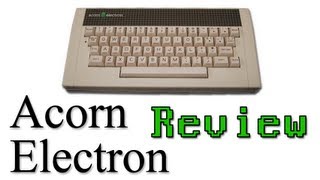
LGR - Acorn Electron Vintage Computer System Review
video description
Date: 2022-04-14
Related videos


Comments and reviews: 10
mspenrice
>Power input on the Electron says 19V AC
>Plugs in a 19V DC supply
Aaaaaaaaaah! Oh god, I hope you double checked and found out that it actually meant DC, and with the same centre-positive polarity as most laptop adaptors, rather than just plugging it in and hoping for the best.
I've accidentally smoked a Spectrum +2 by assuming its -9V DC- input was centre positive before (it wasn't. it's amongst the small, annoying, but noteworthy contingent of devices that have centre negative, and blown the fuse in a set of rather nice and rather expensive Creative desktop speakers by not realising my workplace had taken delivery of two entirely different generations of the same model when ordering four sets at the exact wrong time. and, once things had been opened and distributed to various rooms and computers, connecting the 24V DC supply from one gen to the 28V AC. go figure) input of another. It reaaaaaally didn't like that. Thankfully I was able to replace the fuse, and moreover put the right adaptors with the right speakers (and apply printed warning labels to each of them saying to ONLY use the correct supply / only use each supply with the right speakers) before anyone tried the reverse operation which might have been even more dramatic.
At the time, I kinda thought basically every power adaptor output centre-positive DC. both of these events happened within a couple months of each other, so I very rapidly learned to be MUCH more careful when checking what a particular device demanded, and what any given adaptor provided.
reply
>Power input on the Electron says 19V AC
>Plugs in a 19V DC supply
Aaaaaaaaaah! Oh god, I hope you double checked and found out that it actually meant DC, and with the same centre-positive polarity as most laptop adaptors, rather than just plugging it in and hoping for the best.
I've accidentally smoked a Spectrum +2 by assuming its -9V DC- input was centre positive before (it wasn't. it's amongst the small, annoying, but noteworthy contingent of devices that have centre negative, and blown the fuse in a set of rather nice and rather expensive Creative desktop speakers by not realising my workplace had taken delivery of two entirely different generations of the same model when ordering four sets at the exact wrong time. and, once things had been opened and distributed to various rooms and computers, connecting the 24V DC supply from one gen to the 28V AC. go figure) input of another. It reaaaaaally didn't like that. Thankfully I was able to replace the fuse, and moreover put the right adaptors with the right speakers (and apply printed warning labels to each of them saying to ONLY use the correct supply / only use each supply with the right speakers) before anyone tried the reverse operation which might have been even more dramatic.
At the time, I kinda thought basically every power adaptor output centre-positive DC. both of these events happened within a couple months of each other, so I very rapidly learned to be MUCH more careful when checking what a particular device demanded, and what any given adaptor provided.
reply
TheEPROM9
I have 4 whole Acorn Electrons & one mobo which I restored to full functionality.
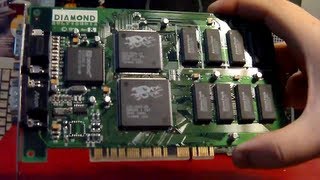
The RAM is held back because it can ouly be addressed though a 4-bit bus hence half the access speed. The reason the RAM is accessed on a 4-bit bus is because they used 4 64K 1 bit chips. So the ULA chould only access 4-bits at once (4-bit to access the first 32K & another 4-bit access cycal to access the final 32K of the chip. Normaly when a system used 1-bit 64K chips there would be 8 of them so the machine could access all the memory at once aka 8-bits. Some examples of machines that used 1-bit memory chips are ZX Spectrum, Atari 800XL, IBM 5150 [Extra chip for error checking aka parity], Commodore Plus4 & the last example Acorn BBC B
reply
I have 4 whole Acorn Electrons & one mobo which I restored to full functionality.
The RAM is held back because it can ouly be addressed though a 4-bit bus hence half the access speed. The reason the RAM is accessed on a 4-bit bus is because they used 4 64K 1 bit chips. So the ULA chould only access 4-bits at once (4-bit to access the first 32K & another 4-bit access cycal to access the final 32K of the chip. Normaly when a system used 1-bit 64K chips there would be 8 of them so the machine could access all the memory at once aka 8-bits. Some examples of machines that used 1-bit memory chips are ZX Spectrum, Atari 800XL, IBM 5150 [Extra chip for error checking aka parity], Commodore Plus4 & the last example Acorn BBC B
reply
DJ_PaulTUK
The Electron though was aimed at Programming rather than games. Since -All- UK schools had BBC Micro's in the 80's, and if you were doing -Computer Studies- like most of us at that time. Then you had a load of coursework to get completed. I remember my Computer studies class had about 15 BBC micro's. So generally you had 2 kids per machine which was still cool.
The Electron being BBC Basic compatible meant you could do your coursework at home, so that was the main selling point to Parents. But it didnt take long for the software houses to start bringing out tons of games. So you could do your homework, and then play games afterwards. Happy memories.
reply
The Electron though was aimed at Programming rather than games. Since -All- UK schools had BBC Micro's in the 80's, and if you were doing -Computer Studies- like most of us at that time. Then you had a load of coursework to get completed. I remember my Computer studies class had about 15 BBC micro's. So generally you had 2 kids per machine which was still cool.
The Electron being BBC Basic compatible meant you could do your coursework at home, so that was the main selling point to Parents. But it didnt take long for the software houses to start bringing out tons of games. So you could do your homework, and then play games afterwards. Happy memories.
reply
Epi
The reason the Electron was slower than the BBC was because Acorn saved money by only using 4 bit DRAM, so it took two memory cycles to access each byte. That also stopped memory and graphics accesses being interleaved, which slowed the machine even further. This is why I was initially reluctant to buy one at the time, although I weakened when the price dropped considerably.
Partly the problem was that DRAMs were either 16k x 1 or 64k x 1, so 32k x 8 was either 16 chips, or 8 chips with half the memory wasted. The older 16k chips also needed a more complicated power supply. Acorn chose 4 chips for 64k x 4, and crippled the CPU speed.
reply
The reason the Electron was slower than the BBC was because Acorn saved money by only using 4 bit DRAM, so it took two memory cycles to access each byte. That also stopped memory and graphics accesses being interleaved, which slowed the machine even further. This is why I was initially reluctant to buy one at the time, although I weakened when the price dropped considerably.
Partly the problem was that DRAMs were either 16k x 1 or 64k x 1, so 32k x 8 was either 16 chips, or 8 chips with half the memory wasted. The older 16k chips also needed a more complicated power supply. Acorn chose 4 chips for 64k x 4, and crippled the CPU speed.
reply
10p6
The Electron was a massive abortion for Acorn. It should have been a drastically cut back BBC which was fully backwards compatibility with the BBC, minus Speech synthesizer and possibly Teletext (If you remove all BBC ports and unnecessary crap, its actually a pretty minimal computer) as the Feranti ULA caused so many development and production problems, and cost a fortune to develop. If they would have done that, with the BBC Computer for schools program, it would have been a sensible purchase for homes and outsold all the other home computers.
reply
The Electron was a massive abortion for Acorn. It should have been a drastically cut back BBC which was fully backwards compatibility with the BBC, minus Speech synthesizer and possibly Teletext (If you remove all BBC ports and unnecessary crap, its actually a pretty minimal computer) as the Feranti ULA caused so many development and production problems, and cost a fortune to develop. If they would have done that, with the BBC Computer for schools program, it would have been a sensible purchase for homes and outsold all the other home computers.
reply
angryanimator
It was my first computer. Great times. Had a built in assembler code also, which I wished I knew how to do, but it was waaaay above my 14 year old brain. HOWEVER, because the BBC's CEEFAX system used BBC micros, and the AE used a very similar grfx, it was possible to create perfect replicas of a CEEFAX news page. I set one up to say a 7. 0 richter scale earthquake had hit Dublin and fooled a long-suffering relative into a minor episode. Evil 14 year old, evil. (We still have the old machine up in the attic.
reply
It was my first computer. Great times. Had a built in assembler code also, which I wished I knew how to do, but it was waaaay above my 14 year old brain. HOWEVER, because the BBC's CEEFAX system used BBC micros, and the AE used a very similar grfx, it was possible to create perfect replicas of a CEEFAX news page. I set one up to say a 7. 0 richter scale earthquake had hit Dublin and fooled a long-suffering relative into a minor episode. Evil 14 year old, evil. (We still have the old machine up in the attic.
reply
Iain
Hello there - I'm sure you've played it at some point, but Elite; what do you think of it? A mind blowing game at the time (well, to a 12 year old. I'd be interested to hear your thoughts.
Oh, and wrong computer, but Carrier Command.
You previewed Atic-Attack, which was great to see, and Wizball, how about Populus?
So, I'm just naming games I liked which I'd love to see you take a look at, I'm sure that's how it works eh?
Cheers, anyway, loving your work sir
reply
Hello there - I'm sure you've played it at some point, but Elite; what do you think of it? A mind blowing game at the time (well, to a 12 year old. I'd be interested to hear your thoughts.
Oh, and wrong computer, but Carrier Command.
You previewed Atic-Attack, which was great to see, and Wizball, how about Populus?
So, I'm just naming games I liked which I'd love to see you take a look at, I'm sure that's how it works eh?
Cheers, anyway, loving your work sir
reply
BigMike2099
God thats a blast from the past. I have a garage full of old computers. Vic20, Electron, BBC B and Master, Archimedes A3000 and a few more. Those cassette games really brought back some good memories. Only recently I spent a small fortune getting a games rig after not touching games for over 20 years. Although these games are like playing a movie they have nothing of the charm of these old simple -fun- games. Maybe it's just be or do others think that also?
reply
God thats a blast from the past. I have a garage full of old computers. Vic20, Electron, BBC B and Master, Archimedes A3000 and a few more. Those cassette games really brought back some good memories. Only recently I spent a small fortune getting a games rig after not touching games for over 20 years. Although these games are like playing a movie they have nothing of the charm of these old simple -fun- games. Maybe it's just be or do others think that also?
reply
Retr0nic
Nice vid. Had to laugh at --weird power, video signal-, but understandable as I find NTSC and 120v: 60Hz as weird, especially since most the world use 230/240V: 50Hz and PAL.
Actually the part that always bugged me is why TVs for NTSC markets do NTSC only. That, and they did not have SCART, with its RGB signal, a godsend for me.
In the end, its fun to dabble with both systems, especially the Mega Drive and the effects on gameplay speed haha!
reply
Nice vid. Had to laugh at --weird power, video signal-, but understandable as I find NTSC and 120v: 60Hz as weird, especially since most the world use 230/240V: 50Hz and PAL.
Actually the part that always bugged me is why TVs for NTSC markets do NTSC only. That, and they did not have SCART, with its RGB signal, a godsend for me.
In the end, its fun to dabble with both systems, especially the Mega Drive and the effects on gameplay speed haha!
reply
ScoopexUs
Hah! It has Exile, go for it: )
Very nice to see American taking an interest in British home computers of the era. I actually forgot the Electron was this powerful, Acorn and BBC hardly marketed their computers abroad so very little was known about them outside England at the time.
My first computer was the simpler Acorn Atom. A very nice home computer from the earlier BASIC era, with the forerunner of as you say ever awesome BBC Basic.
reply
Hah! It has Exile, go for it: )
Very nice to see American taking an interest in British home computers of the era. I actually forgot the Electron was this powerful, Acorn and BBC hardly marketed their computers abroad so very little was known about them outside England at the time.
My first computer was the simpler Acorn Atom. A very nice home computer from the earlier BASIC era, with the forerunner of as you say ever awesome BBC Basic.
reply
Add a review, comment
Other channel videos