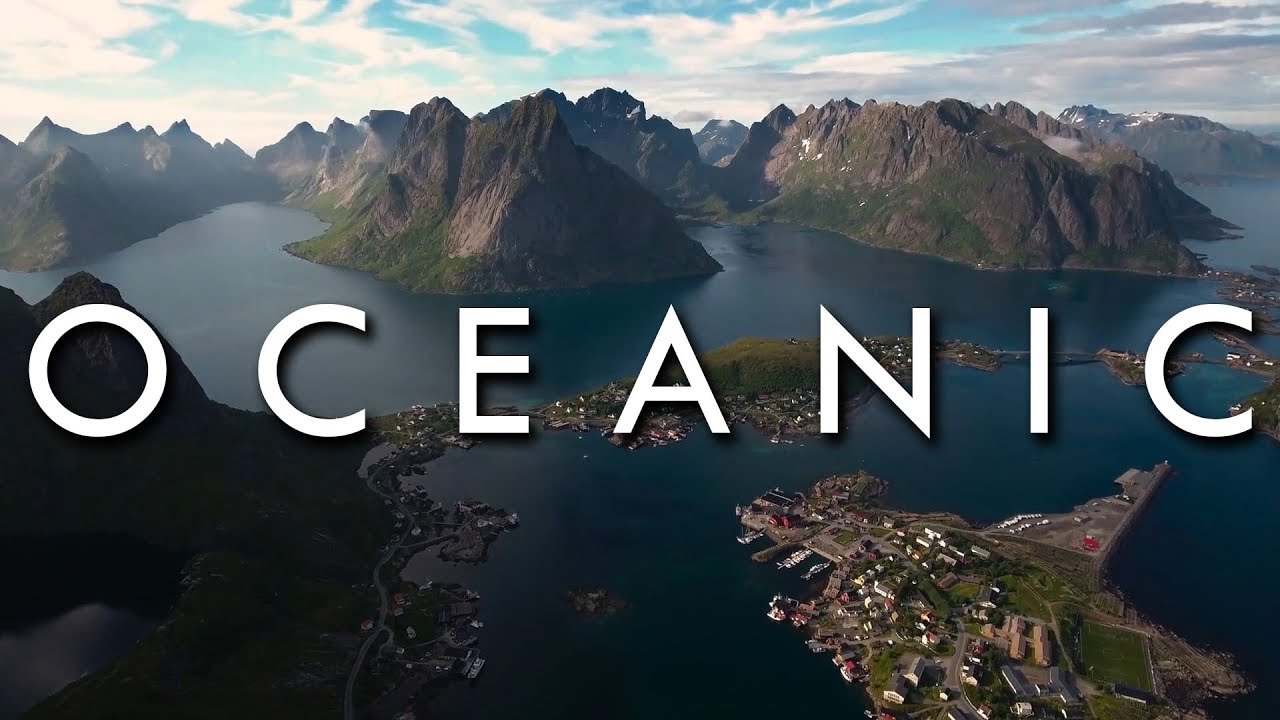
The Oceanic Climate - Secrets of World Climate #7
video description
Date: 2024-01-04
Related videos



Comments and reviews: 35
fun-facts
I live in an Oceanic zone in South eastern Australia, but really anything can happen, except snow! In January it can Often breach 40-C, but are usually in the high 20s I believe the average day-night temperature in January is just below 22-C which is the humid subtropical-Oceanic borderline. Temperatures below 0-C are extremally rare and only ever occour at the end of June. There are more rainy days in winter, especially July and August, and summer doesn't usually have many rainy days, but when it does rain, it rains a lot! And can even lead to floods! I can remember in my childhood just after Christmas that we had 60ml of rain in a single day! it caused a small bridge over a creek to collapse! Leading to a seven year project to build a new, safer bridge. Because of the evergreen trees, Autumn feels just like spring, and only, introduced trees drop their leaves in April. We often just call the season, Easter!
reply
I live in an Oceanic zone in South eastern Australia, but really anything can happen, except snow! In January it can Often breach 40-C, but are usually in the high 20s I believe the average day-night temperature in January is just below 22-C which is the humid subtropical-Oceanic borderline. Temperatures below 0-C are extremally rare and only ever occour at the end of June. There are more rainy days in winter, especially July and August, and summer doesn't usually have many rainy days, but when it does rain, it rains a lot! And can even lead to floods! I can remember in my childhood just after Christmas that we had 60ml of rain in a single day! it caused a small bridge over a creek to collapse! Leading to a seven year project to build a new, safer bridge. Because of the evergreen trees, Autumn feels just like spring, and only, introduced trees drop their leaves in April. We often just call the season, Easter!
reply
-eastfrisianguy
I love it, I live 2 km away from the North Sea in Northwest Germany. I grew up here, the temperature in the summer is bearable and the winter is mild, but often windy and rainy af. Big storms with up to 160 kph (100 mph) wind gusts are possible, but not common every year. Sometimes it is stormy for 20 days in a row. We use every second of sunshine here and I like to go for a walk in almost every weater situation, except summer heat above 25c - However, the constantly high humidity is annoying, in summer you sometimes can't even get your laundry dry outside and in winter this humidity literally creeps into every crack. But I'm very used to it, when I visit my mother, who moved to south-east Germany in a much more continental climate, my skin dries out and especially on hot summer days I miss a cool breeze from the sea.
reply
I love it, I live 2 km away from the North Sea in Northwest Germany. I grew up here, the temperature in the summer is bearable and the winter is mild, but often windy and rainy af. Big storms with up to 160 kph (100 mph) wind gusts are possible, but not common every year. Sometimes it is stormy for 20 days in a row. We use every second of sunshine here and I like to go for a walk in almost every weater situation, except summer heat above 25c - However, the constantly high humidity is annoying, in summer you sometimes can't even get your laundry dry outside and in winter this humidity literally creeps into every crack. But I'm very used to it, when I visit my mother, who moved to south-east Germany in a much more continental climate, my skin dries out and especially on hot summer days I miss a cool breeze from the sea.
reply
-duandwe
I live in Vancouver! And it's a very pretty city but miserable - it's been raining nearly every day since November and will continue to do so through January and most likely Feb as well. Vancouver gets a lot more rain than London (it's a temperate rainforest) so I suppose it's not a typical representative of an oceanic climate, but I really prefer a drier and, more importantly, sunnier continental climate. Sure it might get to -20 in the hinterlands but you can wrap up against the cold, whereas the Vancouver wet manages to get through your waterproof clothing. and all the buses are full of people that smell like wet sheep. Ugh. Guess the grass is always greener on the other side
reply
I live in Vancouver! And it's a very pretty city but miserable - it's been raining nearly every day since November and will continue to do so through January and most likely Feb as well. Vancouver gets a lot more rain than London (it's a temperate rainforest) so I suppose it's not a typical representative of an oceanic climate, but I really prefer a drier and, more importantly, sunnier continental climate. Sure it might get to -20 in the hinterlands but you can wrap up against the cold, whereas the Vancouver wet manages to get through your waterproof clothing. and all the buses are full of people that smell like wet sheep. Ugh. Guess the grass is always greener on the other side
reply
-klaasdeboer8106
I live in Amsterdam, It is definitely changing. There is a reverse pattern, the scandinavian high pressure, which results in spells of continental airmasses flowing over our region. resulting in cold weather in winter and warm to hot weather in late sping and summer. In my younger years this scandihigh appeared more frequently in winter and less so in summer. Now we see this scandihigh more in late spring and summer and less so in winter. Spring and summer are definitely getting warmer drier and sunnier, while winter is getting more boring without the longer cold spells.
reply
I live in Amsterdam, It is definitely changing. There is a reverse pattern, the scandinavian high pressure, which results in spells of continental airmasses flowing over our region. resulting in cold weather in winter and warm to hot weather in late sping and summer. In my younger years this scandihigh appeared more frequently in winter and less so in summer. Now we see this scandihigh more in late spring and summer and less so in winter. Spring and summer are definitely getting warmer drier and sunnier, while winter is getting more boring without the longer cold spells.
reply
-Paddy234
The lack of Sunshine and summer temperature's is why most people complain about this climate zone however both New Zealand and Northern Spain escape this complaint as both these areas mostly receive over 2000 hours of sunshine per year and warmer summer temperatures. It's why kiwis still like to poke fun at us Irish and Brits for our terrible weather even though they are in the same category lol. If one hates too much heat and long cool winters and prefer 45-60% sunshine throughout the year you won't get any better than New Zealand and Northern Spain
reply
The lack of Sunshine and summer temperature's is why most people complain about this climate zone however both New Zealand and Northern Spain escape this complaint as both these areas mostly receive over 2000 hours of sunshine per year and warmer summer temperatures. It's why kiwis still like to poke fun at us Irish and Brits for our terrible weather even though they are in the same category lol. If one hates too much heat and long cool winters and prefer 45-60% sunshine throughout the year you won't get any better than New Zealand and Northern Spain
reply
-julianfunari4691
I live in Melbourne, its quite warm comparatively to the other oceanic climate regions. Winters have days between 12C - 18C depending on direction of the wind, summers can get up to 40C-45C Regularly each summer, but yes it is still changeable in the summer time and occasionally we are impacted by cool westerly winds or even humid north easterly's so we can have a Mediterranean style summer or a humid subtropical summer, it varies year to year.
reply
I live in Melbourne, its quite warm comparatively to the other oceanic climate regions. Winters have days between 12C - 18C depending on direction of the wind, summers can get up to 40C-45C Regularly each summer, but yes it is still changeable in the summer time and occasionally we are impacted by cool westerly winds or even humid north easterly's so we can have a Mediterranean style summer or a humid subtropical summer, it varies year to year.
reply
-InciniumVGC
Okay I think I might like this type of climate the best. I love cloudy skies and rain. I don't like hot weather. And I love the green being everywhere all year. BTW I'm surprised Seattle isn't considered this climate but Vancouver BC is, they really do have similar weather. Must be just barely on the line.
Ohhh I'm guessing the Olympic mountains block some of the westerly wind and form a kind of rain shadow and that has something to do with it.
reply
Okay I think I might like this type of climate the best. I love cloudy skies and rain. I don't like hot weather. And I love the green being everywhere all year. BTW I'm surprised Seattle isn't considered this climate but Vancouver BC is, they really do have similar weather. Must be just barely on the line.
Ohhh I'm guessing the Olympic mountains block some of the westerly wind and form a kind of rain shadow and that has something to do with it.
reply
-apophis4407
Also in Turkey, Black Sea Region has a very similar climate to the Oceanic despite being in the Mediterranean zone, due to its higher altitude.
The region is one of the biggest producers of black tea in the world.
Yet, the region covers a relatively small area. So I think it's just a micro climate thing.
Btw the series is amazing. I'd been looking for something like this for a long time, big thanks.
reply
Also in Turkey, Black Sea Region has a very similar climate to the Oceanic despite being in the Mediterranean zone, due to its higher altitude.
The region is one of the biggest producers of black tea in the world.
Yet, the region covers a relatively small area. So I think it's just a micro climate thing.
Btw the series is amazing. I'd been looking for something like this for a long time, big thanks.
reply
-ssssaa2
Sometimes I wonder if southern argentina would be like this if not for the western mountains, being a small land area at a latitude where the rest of the world is ocean. It would be a very mild and nice place for agriculture, but it's basically a desert as is, making Argentina a smaller agricultural country than larger countries like Brazil or the USA.
reply
Sometimes I wonder if southern argentina would be like this if not for the western mountains, being a small land area at a latitude where the rest of the world is ocean. It would be a very mild and nice place for agriculture, but it's basically a desert as is, making Argentina a smaller agricultural country than larger countries like Brazil or the USA.
reply
-foxnharo
Why does the eastern coast of Australia have oceanic climate? How can this climate be side to side with humid subtropical? It's been 3 months since I can't find an answer, 3 months looking at my imaginary maps and wondering what if do some Australia based landmass not knowing how to explain the cfa-cfb, 3 months not sleeping because I need an answer
reply
Why does the eastern coast of Australia have oceanic climate? How can this climate be side to side with humid subtropical? It's been 3 months since I can't find an answer, 3 months looking at my imaginary maps and wondering what if do some Australia based landmass not knowing how to explain the cfa-cfb, 3 months not sleeping because I need an answer
reply
-dewardc
Hey! Very good videos. Love them! Something I would have loved to see in your video is why an Eastern city like Mar del Plata in Argentina has oceanic climate. I did understand about South-eastern Australia, however, this case is not the same. Do you have a video where you explain this? If not, could you explain that, please?
reply
Hey! Very good videos. Love them! Something I would have loved to see in your video is why an Eastern city like Mar del Plata in Argentina has oceanic climate. I did understand about South-eastern Australia, however, this case is not the same. Do you have a video where you explain this? If not, could you explain that, please?
reply
-NostalgicMem0ries
I hear your nostalgia in video clearly, but for foreigners no matter if from hotter or colder parts, this zone is really depressing, constant rain, always cloudy and sunless. I myself grew in pretty rainy party of europe Lithuania, so i really would not choose this zone as my living place, maybe just for traveling.
reply
I hear your nostalgia in video clearly, but for foreigners no matter if from hotter or colder parts, this zone is really depressing, constant rain, always cloudy and sunless. I myself grew in pretty rainy party of europe Lithuania, so i really would not choose this zone as my living place, maybe just for traveling.
reply
fun-facts
I like the tropical videos you did, but wouldn't want to be in a super dense forest or in danger by something that's going to eat me or poison me: -D I would love somewhere that never goes below 60 degrees F, grows tea, turmeric, and lots of fruit and food to eat for people who are entirely plant based.
reply
I like the tropical videos you did, but wouldn't want to be in a super dense forest or in danger by something that's going to eat me or poison me: -D I would love somewhere that never goes below 60 degrees F, grows tea, turmeric, and lots of fruit and food to eat for people who are entirely plant based.
reply
-LolaPopente
I love these videos of yours! I find oceanic climates particularly interesting because of all the land, particularly small islands, in the southern hemisphere that lie in the roaring forties and beyond, those extremely isolated places are so fascinating to me. Can't wait for your next video!
reply
I love these videos of yours! I find oceanic climates particularly interesting because of all the land, particularly small islands, in the southern hemisphere that lie in the roaring forties and beyond, those extremely isolated places are so fascinating to me. Can't wait for your next video!
reply
-AwesomeZaus
I live in Melbourne which has milder winters and warmer summers than what is typical of Oceanic climates. During El Nino it can feel like we have a hot-summer Mediterranean climate while in La Nina we just get even more rain. Wouldn-t want to live anywhere else in the world.
reply
I live in Melbourne which has milder winters and warmer summers than what is typical of Oceanic climates. During El Nino it can feel like we have a hot-summer Mediterranean climate while in La Nina we just get even more rain. Wouldn-t want to live anywhere else in the world.
reply
-Moneytane1976
I don't consdier northern NZ this climate. Its much warmer winters, and we are only let down by cool summers (Average 18 - 20c. Auckland has an average temperature of 16c, never had snow and hardly frosts, never below 0, yet we are lumped with Alaska and Norway!
reply
I don't consdier northern NZ this climate. Its much warmer winters, and we are only let down by cool summers (Average 18 - 20c. Auckland has an average temperature of 16c, never had snow and hardly frosts, never below 0, yet we are lumped with Alaska and Norway!
reply
-covfefe1787
Wouldn-t western Poland be oceanic as it doesn-t get colder than 32 here in winter except when the Siberian jet stream dips and brings temps down to -10C every couple of winter recently Poland has been a very mild 3-10C and isn-t expected to disappear soon
reply
Wouldn-t western Poland be oceanic as it doesn-t get colder than 32 here in winter except when the Siberian jet stream dips and brings temps down to -10C every couple of winter recently Poland has been a very mild 3-10C and isn-t expected to disappear soon
reply
-cadencasey7233
Galway on the west coast of Ireland gets twice as much rain as Dublin on the east!
Ireland doesn't like to be referred to as part of the British Isles just so you know, there's only been peace since 1998 in civil war between north and south.
reply
Galway on the west coast of Ireland gets twice as much rain as Dublin on the east!
Ireland doesn't like to be referred to as part of the British Isles just so you know, there's only been peace since 1998 in civil war between north and south.
reply
-Geodiode
Do you like grey skies? Do you like rain? Are you a masochist? Welcome to the Oceanic climate! - Seriously, though, if you have experienced this climate on travel or because you live in these zones, let me know of your experience!
reply
Do you like grey skies? Do you like rain? Are you a masochist? Welcome to the Oceanic climate! - Seriously, though, if you have experienced this climate on travel or because you live in these zones, let me know of your experience!
reply
-natt07048
Awesome videos! Keep 'em coming. Just wanna ask a question. In some oceanic climates such as in Vancouver, how come there are dryer summers and wetter winters? Where does the precipitation in the winter come from?
reply
Awesome videos! Keep 'em coming. Just wanna ask a question. In some oceanic climates such as in Vancouver, how come there are dryer summers and wetter winters? Where does the precipitation in the winter come from?
reply
-falafel-jr4lt
I live in the UK (oceanic climate) sure I would like it to snow more or be hotter but it is nice. Sometimes we get hot weeks 30c 85f and sometimes it snows heavily -5c 20f. Its like every climate rolled into one
reply
I live in the UK (oceanic climate) sure I would like it to snow more or be hotter but it is nice. Sometimes we get hot weeks 30c 85f and sometimes it snows heavily -5c 20f. Its like every climate rolled into one
reply
-liamsebestyen4983
One mistake as a vancouverite is that vancouver is actually the warm summer Mediterranean climate. Has significant rain through the winter; however, it only rains a handful of times throughout the summer.
reply
One mistake as a vancouverite is that vancouver is actually the warm summer Mediterranean climate. Has significant rain through the winter; however, it only rains a handful of times throughout the summer.
reply
-ElizondoAbelardo
Such a shame that mountains in the Americas block this climate from going more inland. A green Patagonia where Cfb becomes Cfc as you go south would be really cool and probably densely populated.
reply
Such a shame that mountains in the Americas block this climate from going more inland. A green Patagonia where Cfb becomes Cfc as you go south would be really cool and probably densely populated.
reply
-Erick1997kaiten
I'm confusing, is not only the mediterrenean climate that has dry summer and wet winter? it seems that in this graph, Vancouver, Auckland and Bilbao have this same feature even being oceanic.
reply
I'm confusing, is not only the mediterrenean climate that has dry summer and wet winter? it seems that in this graph, Vancouver, Auckland and Bilbao have this same feature even being oceanic.
reply
-ssssaa2
Always wondered why fjords are common to this climate all over the world. Is there some reason for that or is it just chance? I wouldn't think it would be correlated to climate aside from chance.
reply
Always wondered why fjords are common to this climate all over the world. Is there some reason for that or is it just chance? I wouldn't think it would be correlated to climate aside from chance.
reply
fun-facts
melbourne is also a rare hybrid of this climate and a mediteranean climate. the summers get really hot and dry. record high was 47 degrees. but still doesnt feel as hot as a tropical climate.
reply
melbourne is also a rare hybrid of this climate and a mediteranean climate. the summers get really hot and dry. record high was 47 degrees. but still doesnt feel as hot as a tropical climate.
reply
fun-facts
I don't think the term -most northerly- makes sense in this situation, since you are covering both Northern and Southern Hemisphere in the series. -Most poleward- would make more sense.
reply
I don't think the term -most northerly- makes sense in this situation, since you are covering both Northern and Southern Hemisphere in the series. -Most poleward- would make more sense.
reply
-mysteriousDSF
you say it in such a merry go round way that most of the woodlands have given way to farmlands in Europe yet try to do the same in the island of Borneo and everyone's outraged
reply
you say it in such a merry go round way that most of the woodlands have given way to farmlands in Europe yet try to do the same in the island of Borneo and everyone's outraged
reply
-jonjon94
I would say Vancouver is almost mediterranean. It can be rain free in the summer for long periods of time. Suburbs south of Vancouver (delta) are most certaintly mediterranean
reply
I would say Vancouver is almost mediterranean. It can be rain free in the summer for long periods of time. Suburbs south of Vancouver (delta) are most certaintly mediterranean
reply
fun-facts
Something I don't understand is that in Lima we got a cool ocean but it never rains it only creates a fog but no rain whereas Chile has a cooler sea and it does rain there
reply
Something I don't understand is that in Lima we got a cool ocean but it never rains it only creates a fog but no rain whereas Chile has a cooler sea and it does rain there
reply
-HarleenKaur-zq2he
This whole series is so well made and turns the entire topic into a fun activity. Thank you so much for all the hard work you must have put in making these gems!
reply
This whole series is so well made and turns the entire topic into a fun activity. Thank you so much for all the hard work you must have put in making these gems!
reply
-arish7218
there was no mention of the highlands of south brazil, which is actually the largest area with oceanic climate in south america, much larger than the areas in chile -
reply
there was no mention of the highlands of south brazil, which is actually the largest area with oceanic climate in south america, much larger than the areas in chile -
reply
-hitmangfx7162
So sad, so few parts of the USA having this climate. The imagery is stunning. And I'm one of those people that loves and feels energized when it is raining.
reply
So sad, so few parts of the USA having this climate. The imagery is stunning. And I'm one of those people that loves and feels energized when it is raining.
reply
-joebai2475
In China people view this climate similar to North China Plain. Because total rainfall and hardiness zone is similar. Not exactly the view of the world haha.
reply
In China people view this climate similar to North China Plain. Because total rainfall and hardiness zone is similar. Not exactly the view of the world haha.
reply
fun-facts
What about the other zones with oceanic climates? I found curious that there was a big portion of it along the Andes in Colombia, near the equator.
reply
What about the other zones with oceanic climates? I found curious that there was a big portion of it along the Andes in Colombia, near the equator.
reply
Add a review, comment
Other channel videos